
Key takeaways
- Outdoor venue Wi-Fi fails on the physical layer first: enclosures, sealing, lightning protection, and thermal range matter as much as radio specs.
- Ruggedized APs like the Cisco Catalyst CW9163E and outdoor CW9164 Series are built for IP67-class exposure and external directional antennas that indoor units cannot match.
- Uplink resilience is the single biggest event-day risk; plan redundant fiber paths, PoE budgets, and controller failover before you plan coverage.
- High-density crowds need a capacity design, not a coverage design: tighter cells, lower antenna gain in some zones, and aggressive 5/6 GHz steering.
- Event-day operations live or die on observability and a rehearsed runbook, not on hoping the install works.
- A partner-led RF survey and bill of materials de-risks procurement and warranty far more than buying gear off a spec sheet.
Why Outdoor Venues Break Ordinary Wi-Fi Designs
An indoor access point lives a comfortable life. It hangs in conditioned air, draws clean power from a structured cabling closet, and serves a predictable number of users behind drywall that politely attenuates interference. Move that same thinking outdoors and it collapses within one rainstorm. Outdoor venue Wi-Fi has to survive water ingress, UV degradation, temperature swings from a freezing morning to a baking afternoon, lightning-induced surges on copper, and crowds that materialize by the thousands in under an hour. The failure modes are physical before they are ever about throughput.
The second trap is treating an open field or a concourse like a bigger conference room. Radio behaves differently with no walls to contain it. Signal travels far, co-channel interference becomes brutal, and a crowd of human bodies absorbs 2.4 and 5 GHz energy in ways a planning tool only roughly predicts. Cisco documents these RF realities across its wireless portfolio, and the standards bodies that define the spectrum, the Wi-Fi Alliance and the IEEE, keep raising the bar with Wi-Fi 6E and Wi-Fi 7. None of that helps if the AP enclosure cracks or the uplink drops at kickoff.
The right mental model is a resilience-first design. You are not building a network that works on a quiet Tuesday. You are building one that holds at peak attendance, in bad weather, when one fiber path is cut and one controller is offline. Everything below works backward from that worst day. Our wireless engineering team approaches every outdoor build through that lens on the access points and networking practice, because a stadium or campus quad has no tolerance for a soft design.
Choosing Ruggedized Access Points That Survive the Elements
Ruggedized is not a marketing adjective; it is an environmental rating. The first questions for any outdoor AP are its IP ingress rating, its operating temperature band, and its surge tolerance on both power and antenna ports. The Cisco Catalyst CW9163E is purpose-built for this category, an outdoor Wi-Fi 6E access point with external antenna connectors and a sealed enclosure rated for harsh exposure. For venues pushing into the latest standard, the outdoor members of the Catalyst CW9164 and CW9166 families bring Wi-Fi 7 to high-density outdoor spaces, including directional internal-antenna variants like the CW9166D1 that focus energy where the crowd actually is. Cisco publishes the radio and environmental detail in the Catalyst 9176 outdoor access point data sheet, and we never quote exact ratings from memory, we confirm against the current sheet.
Antenna strategy separates a good outdoor build from a frustrating one. Indoor APs ship with omnidirectional internal antennas because the goal is even room coverage. Outdoors, you frequently want the opposite: directional or sector antennas that throw a controlled beam down a concourse, across a seating bowl, or along a parking structure, while keeping energy off neighbors and off your own adjacent cells. External-antenna models like the CW9163E exist precisely so RF engineers can match gain and pattern to the geometry of the venue. Picking the wrong antenna turns a $1,500 access point into an interference generator.
Power and mounting are the unglamorous deciders. Many outdoor APs draw more than legacy PoE can deliver, so the upstream switch has to budget for it, and the mount has to tolerate wind load and vibration without drifting out of aim. We document all of this in the Wi-Fi 7 hardware guidance and validate it on site during a survey rather than guessing from a CAD drawing. The cheapest mistake to fix is the one you catch before the lift goes up.
- IP66/IP67-class sealing against rain, dust, and wash-down
- Wide operating temperature range for sun load and overnight cold
- Surge and lightning protection on power and external antenna ports
- External or directional antenna options to shape coverage by zone
- PoE class that matches the AP draw, verified against the data sheet
Engineering Uplinks and Power for the Worst Day
Coverage gets the attention, but uplinks decide whether the event survives. Every outdoor AP is only as available as the cable, switch, and power feeding it. The classic outdoor failure is a single fiber run to a remote light pole or concourse closet, with every AP in that zone hanging off one path. Cut that fiber, lose a media converter, or trip that one breaker, and a whole section of the venue goes dark at the worst possible moment. Resilient design means dual-homed uplinks, diverse physical routes where the trenching allows, and switch stacks that survive a member failure.
The aggregation layer carries real weight here. Hardened or standard Cisco Catalyst switches such as the Catalyst 9300 Series provide the PoE budget, stacking resilience, and uplink density that outdoor AP fields demand, and they tie cleanly into a redundant core. Power budgeting is not a footnote: a concourse with forty high-draw Wi-Fi 7 APs can exceed the PoE capacity of an undersized switch, and the symptom is APs that boot, brown out under load, and reboot in a loop on game day. We size this explicitly in the switching design so the math is proven on paper before anything is racked.
Controllers and management need the same failover discipline. A pair of Cisco Catalyst 9800 wireless controllers in a high-availability configuration keeps APs joined and clients connected when one controller drops, and the design should assume that will happen, not hope it won't. Our wireless controllers practice pairs HA controllers with redundant power and out-of-band management so a single fault never becomes a single point of failure. For the venue operator, the headline is simple: every link, switch, controller, and power feed in the critical path needs a partner that can carry the load alone.
RF Planning for High-Density Crowds
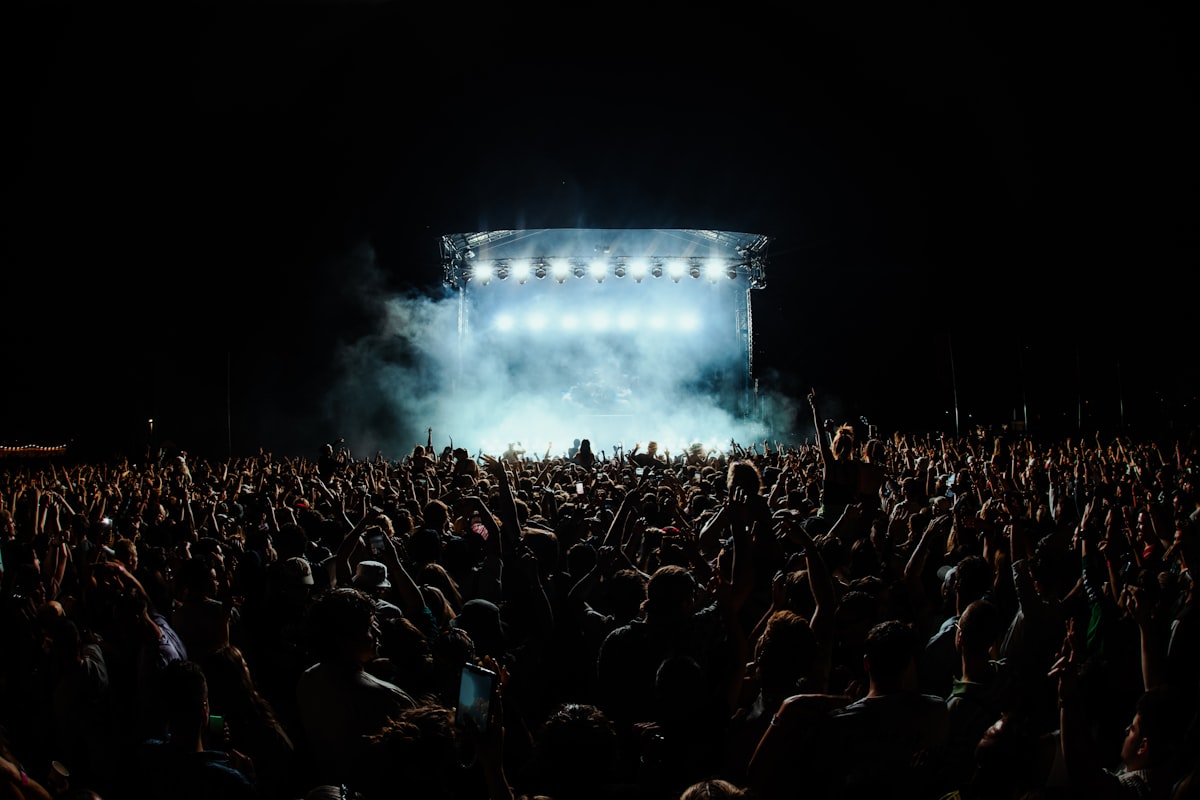
A field at 8 a.m. and the same field with 30,000 people are two different RF environments. Human bodies absorb signal, devices flood the air with probe requests, and a design tuned for coverage will choke on capacity. The shift in mindset is from how far does the signal reach to how many clients can each cell actually serve. That usually means more access points at lower power, tighter cells, and antennas chosen to keep adjacent sectors from stepping on each other. Counterintuitively, turning power down often improves a crowded venue because it shrinks cells and raises spatial reuse.
Spectrum is your scarcest resource, so use all of it deliberately. The 6 GHz band that Wi-Fi 6E and Wi-Fi 7 opened up, governed in the United States by the FCC, provides clean wide channels that older clients cannot crowd, which makes it ideal for the densest zones. Band steering should push capable devices off 2.4 GHz, which you keep narrow and low for legacy and IoT only. Channel width is a balance: wide channels boost peak speed but reduce the number of non-overlapping channels available for reuse, and in a packed seating bowl, more channels usually beats wider ones.
Predictive planning gets you close; a real survey gets you correct. Pre-deployment modeling sets AP counts and rough placement, but outdoor geometry, reflective surfaces, and metal structures move signal in ways software underestimates. A post-install validation survey with the crowd-load profile in mind catches the dead spots and the interference hot zones before the public does. We build this into the services/design engagement and lean on observability tooling to baseline the air before opening day, so the network is tuned to reality rather than to a hopeful map.
Security, Segmentation, and Guest Access Outdoors
An outdoor venue network is a public-facing attack surface with physical access points anyone can walk up to. That changes the security posture. APs on light poles and fences can be tampered with, so the design should assume an attacker can reach the hardware and the cable. Strong network access control, encrypted management, and segmentation that contains a compromised port are not optional. For public-sector and regulated venues, configurations should align with recognized baselines such as the NIST SP 800-53 controls and, where applicable, the DISA STIGs that DoD and federal facilities require.
Segmentation is the practical core. Public guest Wi-Fi, point-of-sale, ticketing, broadcast, building systems, and staff operations must live on separate logical networks so a problem in one cannot reach another. A breached guest device should never see the payment terminals or the access-control system. Identity-driven policy, captive portals for guests, and microsegmentation between operational domains turn a flat, fragile network into a contained one. This is where a managed policy fabric and consistent enforcement across wired and wireless pays off.
Operationally, the security model has to be maintainable by the venue team long after install. That means centralized policy, automated certificate and credential handling, and clear logging that an on-site operator can actually read during an incident. We design these controls in the security and managed-operations practices so the venue inherits a network that is defensible on day one and stays that way through firmware cycles and seasonal staff turnover. Security that only the original installer understands is security that decays.
Event-Day Operations and Observability
The install is the easy part. The hard part is the four hours when the venue is full and something goes wrong. Event-day resilience is an operational discipline, not just a hardware list. It starts with observability: real-time visibility into AP health, client counts per cell, channel utilization, PoE draw, and uplink status, surfaced on a dashboard that an operator can scan in seconds. Cisco Catalyst Center centralizes that telemetry across the wireless and switching estate, turning thousands of data points into a few actionable signals. Without it, you are debugging a sold-out crowd blind.
A rehearsed runbook beats improvisation every time. Before the gates open, the team should know exactly who watches the dashboards, what the escalation path is, how to fail a controller over manually, and which spares are staged where. Load-test the network against a realistic device count, not an empty venue. Walk the worst zones with the crowd profile in mind. The goal is that any predictable failure, a dead AP, a saturated cell, a flapping uplink, has a known, practiced response that takes minutes, not a frantic search for the right cable.
This is where a partner-led managed operations model earns its keep, especially for venues without a large in-house network team. Continuous monitoring, on-call escalation, and post-event analysis turn each game or concert into a tuning opportunity for the next one. We deliver this through managed-operations and stand it up during services/deployment, so the venue is not learning its own network for the first time under a full house. Resilience is rehearsed, not wished for.
Procurement, Lifecycle, and Partner Support
Buying outdoor wireless gear off a spec sheet is how projects end up with mismatched antennas, undersized PoE, and warranty gaps nobody noticed until something failed. Outdoor APs, hardened switches, controllers, antennas, mounts, surge protectors, and the right optics form a single bill of materials that has to be coherent. A partner-built BOM, validated against a real RF survey, prevents the expensive surprises and keeps the whole system under a unified support umbrella. Public-sector buyers often hold their own GSA Schedule or NASA SEWP contract, and Cisco documents those paths on its government solutions resources; Uniqcli does not hold a Schedule or SEWP contract, so we sell through GPC purchases, Simplified Acquisition, and direct FAR-based purchase orders instead.
Lifecycle planning protects the investment after the trucks leave. Coverage agreements such as Cisco Smart Net Total Care provide hardware replacement, software support, and the rapid response an outdoor venue needs when an AP on a 60-foot pole dies mid-season. Equally important is tracking the Cisco end-of-life and end-of-sale policy so the venue is not running gear that has aged out of support or security updates. Outdoor hardware works hard and ages faster than indoor equipment, which makes proactive lifecycle management a budget decision, not just a technical one.
The thread through all of it is a single accountable partner. When the survey, the BOM, the install, the security baseline, and the support contract come from one team, there is no finger-pointing when something needs fixing. As an Authorized Cisco Partner serving federal, SLED, healthcare, and enterprise venues, we keep that accountability in one place. For a scoped design and a firm number, request a Cisco Wi-Fi 7 quote and we will build the outdoor venue package against your actual site, crowd profile, and contract vehicle.
Cisco products involved
- Cisco Catalyst CW9163E
- Cisco Catalyst CW9164 Series
- Cisco Catalyst CW9166D1
- Cisco Catalyst 9800 Wireless Controllers
- Cisco Catalyst 9300 Series Switches
- Cisco Catalyst Center
- Cisco Meraki MR outdoor APs
Bottom line: Outdoor venue Wi-Fi succeeds when ruggedized hardware, redundant uplinks, and a rehearsed event-day runbook are designed together, not bolted on. Tell us your venue and attendance profile and we will scope the build: request a quote.
Frequently asked questions
What makes an access point ruggedized for outdoor venue use?
A ruggedized outdoor AP carries an environmental ingress rating like IP66 or IP67 against rain and dust, a wide operating temperature range for sun and cold, and surge protection on power and antenna ports. Models such as the Cisco Catalyst CW9163E also offer external antenna connectors so RF engineers can shape coverage. Always confirm exact ratings against the current Cisco data sheet rather than a general claim.
Can I use indoor Cisco access points outdoors if they are under a roof?
Generally no. Indoor APs lack the sealing, temperature tolerance, and surge protection that outdoor exposure demands, and even covered concourses see humidity, dust, and temperature swings that void warranties and shorten hardware life. Use purpose-built outdoor models like the Catalyst CW9163E or the outdoor CW9164 and CW9166 families, which are designed and rated for the environment.
How do I keep the network up if a fiber uplink or controller fails on event day?
Design for failure: dual-homed uplinks over diverse physical paths, Catalyst switch stacks that survive a member failure, and a pair of Catalyst 9800 controllers in high availability so clients stay connected if one drops. Pair that with redundant power and a rehearsed manual-failover runbook. The goal is that any single fault in the critical path is carried by its partner without an outage.
Why does turning AP power down sometimes improve crowded venue Wi-Fi?
In a dense crowd the problem is capacity, not range. Lowering transmit power shrinks each cell, which reduces co-channel interference and lets more access points reuse the same spectrum across the venue. Combined with 6 GHz Wi-Fi 6E and Wi-Fi 7 channels and band steering off 2.4 GHz, smaller cells let each AP serve its clients cleanly instead of fighting its neighbors.
How should an outdoor venue segment guest, point-of-sale, and operational traffic?
Keep public guest Wi-Fi, payment systems, ticketing, broadcast, building systems, and staff operations on separate logical networks with identity-driven policy and microsegmentation between them. A compromised guest device should never reach payment terminals or access control. For regulated and public-sector venues, align configurations with baselines such as NIST SP 800-53 and applicable DISA STIGs.
Can a Cisco partner handle procurement through government contract vehicles?
Uniqcli does not hold a GSA Schedule, NASA SEWP, or NASPO contract, so we do not quote against those vehicles. As an Authorized Cisco Partner we build the outdoor wireless bill of materials, validate it against an RF survey, and sell through GPC purchases, Simplified Acquisition (FAR Part 13), and direct FAR-based purchase orders. We also attach lifecycle coverage like Smart Net Total Care and track end-of-life status so the venue stays supported across seasons.
Uniqcli Team
The Uniqcli Team is an authorized Cisco partner specializing in Catalyst wireless, switching, datacenter fabric, licensing, and managed services for U.S. federal, state, local, and education customers. We scope Cisco bills of materials, validate procurement paths (TAA, FIPS, contract vehicles), and deliver design, deployment, and managed operations.
Ready to scope your Cisco build?
Build a quoteRelated reading
View all → Guides
Designing high-density Wi-Fi for stadiums and arenas
A packed stadium is the hardest Wi-Fi environment on earth: tens of thousands of clients in one RF space, all live at the same second. Here is how to design Cisco high-density wireless that holds up at kickoff, not just on a quiet weekday walk-through.
June 6, 2026 · 13 min read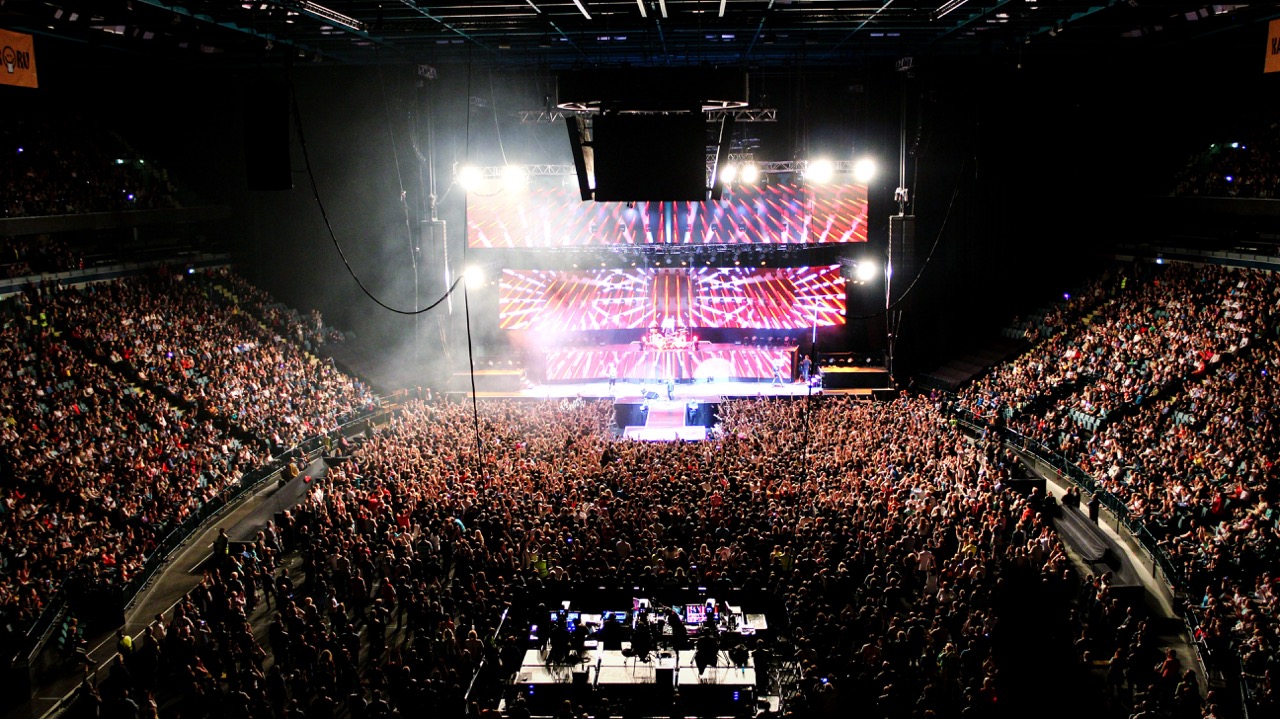 Guides
Stadium Wi-Fi capacity planning: sizing for a packed house
A sold-out crowd is the most hostile RF environment your wireless will ever face. Here is how to size Cisco Wi-Fi for a packed house, from device density math to antenna geometry to controller headroom.
June 6, 2026 · 12 min read Guides
AP density and counts: Wi-Fi 6 vs Wi-Fi 7
Wi-Fi 7 changes the math on how many access points a high-density space actually needs. Here is how AP counts shift between Wi-Fi 6 and Wi-Fi 7, why the answer is rarely "fewer APs," and how to size a Cisco Catalyst deployment that holds up under real load.
April 19, 2026 · 12 min read Guides
MU-MIMO across Wi-Fi 6, 6E, and 7
How multi-user MIMO matured from Wi-Fi 6 through 6E and into Wi-Fi 7, and what the changes mean for high-density Cisco wireless deployments in government, healthcare, and enterprise.
March 25, 2026 · 10 min read Guides
How to size a campus wireless deployment: APs, switching and licensing
Sizing a campus wireless refresh is three problems wearing one trench coat: enough APs for the RF, enough switch ports and PoE to feed them, and the right licensing to run it all. Here is how to scope each layer so the bill of materials lands once.
June 6, 2026 · 12 min read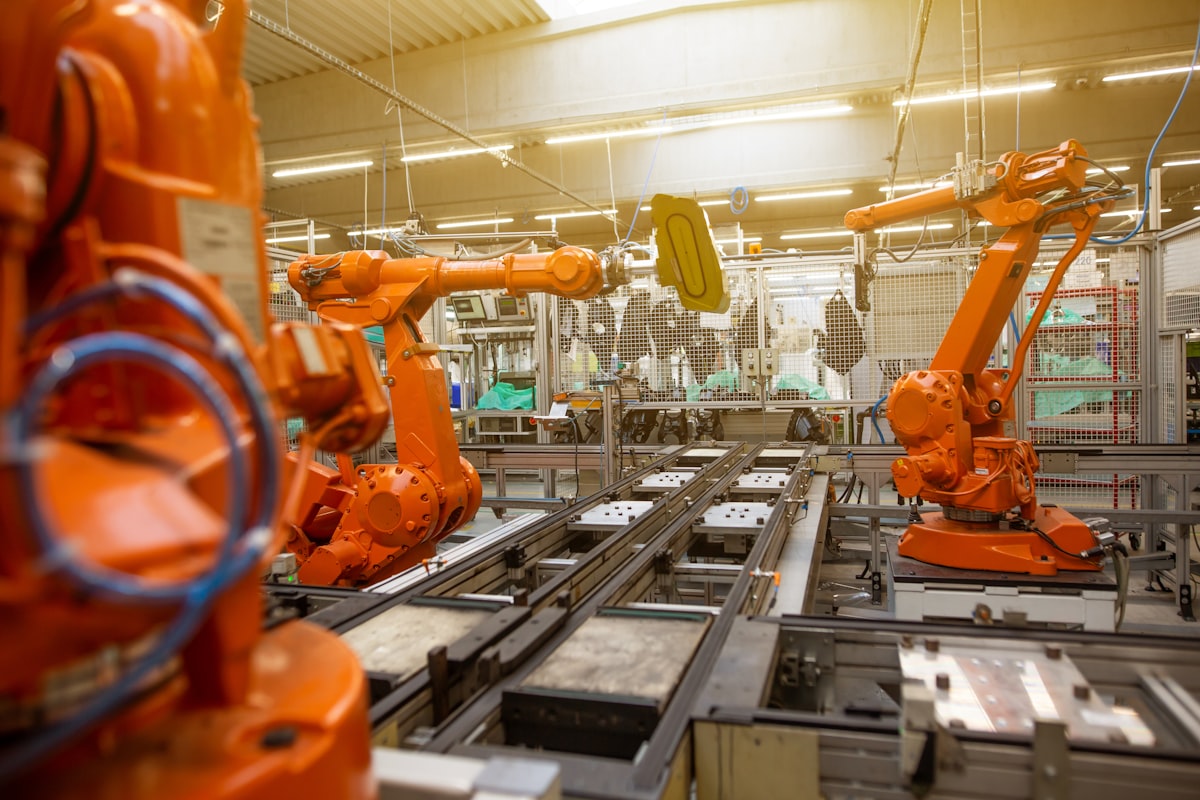 Guides
Private 5G vs Wi-Fi: when to use which in industrial environments
Private 5G and Wi-Fi 7 are not rivals so much as tools for different jobs. Here is how to decide which radio belongs where on a factory floor, a port, a mine, or a hospital campus, and how the two coexist under one Cisco-managed network.
June 6, 2026 · 11 min read