
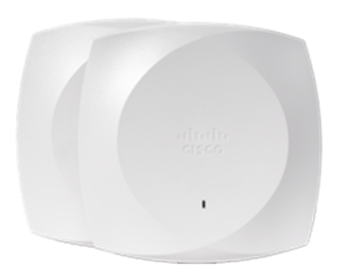
This is a different matchup than Meraki vs. Aruba. Catalyst 9100 access points are Cisco's traditional, controller-capable enterprise wireless line, not the cloud-only Meraki side of the portfolio, and they compete with Aruba's access points on the same terms Aruba plays on: flexible on-prem or cloud management, fabric-based segmentation, and tiered licensing. Neither vendor forces a single deployment posture here, so the decision comes down to which campus fabric strategy, licensing model, and NAC platform you're already building around.
Both lines perform well across a typical enterprise campus. The differentiators are architectural: how Catalyst Center and Aruba Central structure licensing, how each vendor's software-defined fabric handles segmentation, and how the 9100 family's own internal tiering (9115 through 9130) maps against Aruba's comparable range.
At a glance
| Factor | Cisco Catalyst 9100 | Aruba access points |
|---|---|---|
| Management model | 9800 WLC (on-prem) or Catalyst Center (on-prem or cloud-monitored) | Mobility Conductor (on-prem) or Aruba Central (cloud), your choice |
| Licensing | Term or perpetual license tiers gating Catalyst Center features | Subscription tiers gating Central and fabric/SD-Branch features |
| Fabric / SDN | Cisco SD-Access, policy driven by Security Group Tags via ISE | Aruba's own fabric and SD-Branch approach, policy via ClearPass |
| Family tiering | 9115 (compact/branch) through 9120 (mainstream) to 9130 (high-density) | Comparable branch-to-high-density tiered AP lineup |
| NAC | Cisco ISE, deep native integration | Aruba ClearPass, deep native integration |
| Best fit | Campus already built or building on Cisco SD-Access and ISE | Campus already built or building on Aruba fabric and ClearPass |
Management model: two vendors, the same flexible choice
Unlike a Meraki comparison, this one is genuinely symmetric on architecture. Catalyst 9100 access points run under a traditional 9800 Series wireless LAN controller on-premises, or under Catalyst Center, which can operate on-prem or with cloud-based monitoring and automation layered on top. Aruba mirrors that structure: Mobility Conductor for on-premises controller-based deployment, or Aruba Central for a cloud-managed experience. Neither vendor is cloud-only or on-prem-only at this tier, both let you choose, and both let you change your mind later without replacing access points.
Licensing: tiered features, not a binary on/off switch
Catalyst access points ship with base connectivity, but the higher-value features, full Catalyst Center automation, assurance analytics, and SD-Access fabric participation, are gated behind license tiers that scale with what you want the controller layer to do, not just how many APs you own. Aruba follows a parallel model: Central's dashboard and fabric/SD-Branch capabilities sit behind their own subscription tiers. Neither structure is simple enough to summarize in a sentence, and both vendors adjust tier names and inclusions over time, so confirm exact current tiering and what's bundled for your specific deployment with a validated quote before you finalize a bill of materials.
Family positioning: matching tier to tier, not top to bottom
The most common mistake in a Catalyst-vs-Aruba bake-off is comparing the wrong tiers against each other, pricing Cisco's compact branch access point against Aruba's high-density flagship, or vice versa. The Catalyst 9100 family spans a real range: the 9115 sits at the compact, branch-and-small-office end, the 9120 covers mainstream general-purpose deployment, and the 9130 is positioned for higher-density spaces that need more headroom. Aruba organizes its own lineup along a comparable branch-to-high-density curve. Neither vendor publishes numbers here that are useful to repeat in a comparison article without a specific model and firmware release in hand, treat family positioning as a starting point for design, and confirm exact specifications for your shortlist through a validated quote rather than a spec sheet pulled from memory.
Fabric and NAC: the decision usually already happened upstream
Cisco SD-Access uses Security Group Tags, policy driven through Identity Services Engine (ISE), to segment traffic across a fabric that spans switching and wireless together. Aruba's fabric and SD-Branch approach solves the same problem through its own architecture, with ClearPass handling policy. If your campus has already committed to one fabric strategy for switching, that decision almost always determines the wireless vendor too, running Catalyst switching with Aruba wireless (or the reverse) forfeits the single biggest advantage either fabric offers: one policy model across the whole campus.
This is worth stating plainly because it gets skipped in feature-by-feature comparisons: a mixed-vendor fabric isn't just inelegant, it actively removes the reason most organizations adopt a fabric architecture in the first place. If you're not planning to build a unified fabric at all, the fabric/NAC section of this comparison matters far less, and the decision reduces to management model, licensing, and family positioning instead, which is exactly why it pays to settle the fabric question first, before comparing access point tiers line by line.
The switch closet decides more than the ceiling does
Neither Catalyst nor Aruba access points operate in a vacuum, both vendors' higher-tier models expect a healthy multigigabit uplink and PoE budget from the switch underneath them, and that requirement scales with the tier you choose within either family. A high-density access point bolted to an access-layer switch that can't supply adequate power or uplink bandwidth will underperform regardless of which vendor's logo is on it.
This is where a Catalyst-vs-Aruba decision often gets decided by inertia rather than analysis: whichever vendor's switches are already in the closet usually determines the access point vendor too, because validating a second vendor's power and uplink requirements against an existing access layer is real engineering work most teams would rather not duplicate. Confirm your access-layer PoE and uplink capacity against your shortlisted access point tier before finalizing either vendor.
Which should you choose?
- Campus already standardized on Cisco switching, ISE, and SD-Access: Catalyst 9100 wireless keeps the fabric and policy model unified end to end.
- Campus already standardized on Aruba switching, ClearPass, and its fabric approach: Aruba access points preserve the same unified benefit on that side.
- Greenfield build with no existing fabric commitment: evaluate both controller/cloud experiences directly and compare tier-matched access points, not top-to-bottom spec sheets.
- Need on-premises policy enforcement with the option to add cloud monitoring later: both Catalyst Center and Aruba Central support that path, the tie-breaker is usually the NAC platform.
- Sizing within the Catalyst family specifically: match the 9115/9120/9130 tier to your density and budget before comparing outward to Aruba at all.
Frequently asked questions
Is Cisco Catalyst 9100 wireless cloud-managed or on-premises?
Both, by choice. Catalyst 9100 access points can run under a traditional 9800 Series wireless LAN controller entirely on-premises, or under Catalyst Center, which supports on-prem deployment with the option to layer cloud-based monitoring and automation on top. It is not locked into either model the way Meraki is cloud-only.
Does Aruba wireless require ClearPass to function?
No, ClearPass is not mandatory, but it is Aruba's native NAC platform and the integration between the two is deep. Organizations that have already invested in ClearPass for policy and identity typically get the most value from pairing it with Aruba wireless rather than mixing NAC vendors.
How do the Catalyst 9115, 9120, and 9130 compare to Aruba's lineup?
Both vendors organize their access points along a similar branch-to-high-density curve: a compact tier for small sites and branches, a mainstream tier for general-purpose deployment, and a higher-density tier for spaces that need more headroom. Compare tier to tier rather than top to bottom, and confirm exact current specifications for your shortlist through a validated quote.
Can Catalyst and Aruba fabrics interoperate on the same campus?
Not in a way that preserves the single-policy-model benefit either fabric is built to deliver. Cisco SD-Access and Aruba's fabric/SD-Branch approach are each designed to unify switching and wireless policy under one architecture; running one vendor's switching with the other's wireless forfeits that unification even if the network technically passes traffic.
Which vendor has simpler licensing, Cisco or Aruba?
Neither is simple, and both use tiered subscription or term licensing that gates advanced controller and fabric features rather than a flat per-device fee. Tier names and inclusions change over time for both vendors, so treat any specific tier breakdown as a starting point and confirm current terms with a validated quote.
Is Aruba a viable alternative if we're already a Cisco shop for switching?
Technically yes, but it forfeits the unified fabric and single-NAC-policy benefit of staying with one vendor across switching and wireless. Most Cisco-standardized campuses get more operational value from Catalyst wireless than from introducing a second fabric and a second NAC platform.
Uniqcli Team
The Uniqcli Team is an authorized Cisco partner specializing in Catalyst wireless, switching, datacenter fabric, licensing, and managed services for U.S. federal, state, local, and education customers. We scope Cisco bills of materials, validate procurement paths (TAA, FIPS, contract vehicles), and deliver design, deployment, and managed operations.
Ready to scope your Cisco build?
Build a quoteRelated reading
View all → Guides
What is Wi-Fi 6? The 802.11ax standard explained
A plain-English, sourced explainer of Wi-Fi 6 and the IEEE 802.11ax standard: what OFDMA, MU-MIMO, and Target Wake Time actually do, where the real gains show up, and how to plan a Cisco wireless refresh for enterprise, healthcare, and federal networks.
January 16, 2026 · 10 min read Guides
What is Wi-Fi 6E? The 6 GHz band explained
Wi-Fi 6E takes the 802.11ax standard and opens it up to the 6 GHz band, adding a wide stretch of clean, uncongested spectrum. Here is what the band actually does, why it matters for dense enterprise sites, and how to plan a Cisco deployment around it.
January 11, 2026 · 11 min read Guides
How to size a campus wireless deployment: APs, switching and licensing
Sizing a campus wireless refresh is three problems wearing one trench coat: enough APs for the RF, enough switch ports and PoE to feed them, and the right licensing to run it all. Here is how to scope each layer so the bill of materials lands once.
June 6, 2026 · 12 min read Guides
Outdoor venue Wi-Fi: ruggedized APs, uplinks and event-day resilience
Outdoor venues punish ordinary wireless designs. Here is how to spec ruggedized Cisco access points, harden uplinks, and engineer a network that survives a sold-out event day.
June 6, 2026 · 11 min read Insights
Wi-Fi 6E over Wi-Fi 6: the real pros and cons
A buyer's breakdown of Wi-Fi 6E versus Wi-Fi 6 for enterprise, federal, and DoD networks: where the 6 GHz band genuinely pays off, where it falls short, and how to decide what to buy.
February 11, 2026 · 12 min read Guides
Cisco Catalyst Wi-Fi 7 access points: the lineup
A practical, model-by-model tour of Cisco's Catalyst Wi-Fi 7 access point family, from the compact CW9171 to the flagship CW9179F, with guidance on matching radios, uplinks, and form factors to real deployments.
April 30, 2026 · 11 min read