

Cisco UCS vs. Dell PowerEdge is less about raw server hardware, both build competent Intel and AMD rack and blade servers, and more about the management model wrapped around that hardware. Cisco UCS is built around a fabric-based architecture, with Fabric Interconnects, UCS Manager or Intersight, and portable service profiles that abstract server identity from physical hardware. Dell PowerEdge is managed per-server through iDRAC, with OpenManage Enterprise (OME) as the fleet-wide layer. Cisco's model pays off most at scale, where policy-based, stateless provisioning reduces operational overhead across dozens or hundreds of nodes. Dell's model is simpler to reason about for standalone servers or smaller fleets that don't need fabric-based architecture at all. Neither is objectively better, they optimize for different operational scale, and the right pick usually falls out of how big your fleet is and what you're already running.
At a glance
| Category | Cisco UCS | Dell PowerEdge |
|---|---|---|
| Management model | Fabric-based: Fabric Interconnects + UCS Manager/Intersight + service profiles | Per-server: iDRAC (baseboard management) + OpenManage Enterprise (fleet layer) |
| Server identity | Abstracted into a portable service profile (MAC, WWN, UUID, firmware policy) | Tied more directly to the physical server and its iDRAC configuration |
| Cloud-based management | Intersight, SaaS management across UCS, HyperFlex, and hybrid cloud | OpenManage Enterprise, with cloud-connected fleet views |
| Fabric requirement | Fabric Interconnects required for the full policy/profile model on blade and some rack deployments | No fabric requirement, PowerEdge rack servers run fully standalone |
| Support programs | Cisco TAC with SmartNet/Solution Support coverage tiers | Dell ProSupport / ProSupport Plus coverage tiers |
| Best fit | Larger, policy-managed fleets; organizations standardizing on Cisco data center fabric | Standalone or smaller deployments; teams wanting simple per-box management |
| Form factors | Rack (C-Series), modular (X-Series), historically blade (B-Series) | Rack (R-Series), tower (T-Series), modular (MX-Series) |
The core difference: stateless service profiles vs. per-server management
Cisco's defining architectural bet with UCS was to separate a server's identity from the physical box it runs on. A UCS service profile captures MAC addresses, WWNs, UUID, firmware versions, BIOS policy, and network and storage connectivity as a software object that can be applied to any compatible blade or rack node behind a Fabric Interconnect, and, just as importantly, moved to a replacement node in minutes if hardware fails, the new node boots up presenting the exact same identity the failed one had, so upstream network, storage, and OS-level configuration don't need to change. Dell's iDRAC gives you the same class of out-of-band control, power, console, firmware, health telemetry, on a per-server basis, and OpenManage Enterprise adds templates and fleet-wide policy on top of that, but the identity stays anchored to the physical server rather than becoming a portable object. For a shop replacing failed hardware occasionally, that distinction barely matters. For a shop standing up or rebuilding dozens of nodes a quarter, service-profile portability is a meaningfully different operating model, not just a UI difference.
Intersight vs. iDRAC/OME: where each management layer shines
Cisco Intersight is a SaaS management plane that spans UCS servers, HyperFlex nodes, and increasingly third-party and hybrid-cloud infrastructure from one console, with built-in automation, workload optimization, and infrastructure-as-code integration for teams running Kubernetes or Terraform. Dell's equivalent layer, OpenManage Enterprise, is a strong on-prem and increasingly cloud-connected fleet console for monitoring, firmware compliance, and template-based configuration across PowerEdge servers, it's a mature, well-understood tool with a large installed base, especially where Dell already dominates the rack. The practical question for IT leadership isn't which console has more menus; it's whether your team is already standardized on one vendor's automation tooling and whether adding a second console for a smaller server footprint is worth the operational cost.
Support, warranty, and lifecycle management
The management-model story extends into how each vendor supports the hardware after it's racked. Cisco backs UCS through Cisco TAC, with SmartNet and Solution Support contracts providing hardware replacement, software support, and access to Cisco's case-management system, the same support relationship many IT teams already have for switches and routers, which is part of Webex and UCS's broader single-vendor pitch. Dell backs PowerEdge through ProSupport and ProSupport Plus, a well-regarded program with options like next-business-day or mission-critical four-hour parts replacement, and Dell's services organization is large and experienced specifically at rack-server break/fix at scale. Neither program is inherently better; the practical question is whether a support ticket for this server lands in the same queue, portal, and account team as the rest of your infrastructure, or in a separate relationship you have to maintain in parallel. Confirm exact SLA tiers, response times, and pricing for your fleet size in a validated quote rather than assuming parity between the two.
Fabric Interconnects and cabling: the tradeoff Cisco asks you to accept
UCS's fabric-based model has a real cost: to get the full service-profile and policy benefit on blade systems, and on rack servers managed through the same domain, you need Fabric Interconnects sitting between compute and the rest of the network, additional hardware, additional licensing, and an architecture decision made up front. Dell PowerEdge rack servers need none of that; a single R-Series server plugs into your existing top-of-rack switching and is fully manageable via iDRAC out of the box, with no fabric domain required. That makes PowerEdge the lower-friction choice for a handful of standalone servers, an edge site, or a workload that doesn't justify fabric investment. It's also why the UCS-vs-PowerEdge decision often isn't really about server hardware at all, it's about whether the fabric-based operating model is worth adopting for your scale.
Which should you choose?
Weigh the decision against your fleet size and how much of your data center is already Cisco fabric, not just per-unit specs.
- Choose Cisco UCS if you're deploying at scale and want stateless, policy-based provisioning with fast hardware-failure recovery via portable service profiles.
- Choose Cisco UCS if you already run Cisco Nexus or fabric switching and want a unified Intersight view across compute, HCI, and network.
- Choose Dell PowerEdge if you need a handful of standalone rack servers without justifying a Fabric Interconnect investment.
- Choose Dell PowerEdge if your team is already fluent in iDRAC/OME and a second management paradigm adds more overhead than value.
- Either way, price support alongside hardware, a lower-cost server with a weaker support tier can cost more over a five-year lifecycle than a well-supported one.
Frequently asked questions
Is Cisco UCS better than Dell PowerEdge?
Neither is universally better, they optimize for different operating models. Cisco UCS's fabric-based architecture and portable service profiles pay off most at scale, where policy-driven provisioning reduces operational overhead. Dell PowerEdge's per-server iDRAC/OME model is simpler for standalone servers or smaller fleets that don't need fabric-based infrastructure. Match the platform to your deployment scale, not a generic ranking.
What is a UCS service profile?
A service profile is a software object that captures a server's identity, MAC addresses, WWNs, UUID, firmware policy, and network and storage connectivity, separately from the physical hardware it runs on. It can be applied to any compatible node behind a Fabric Interconnect and moved to replacement hardware quickly if a server fails, which is Cisco's core architectural differentiator versus per-server management models.
Do I need Fabric Interconnects to run Cisco UCS servers?
For the full policy-based, service-profile management model on blade systems, and rack servers managed through the same domain, yes. Cisco does offer standalone management options for certain rack servers outside a fabric domain, but the signature UCS operating model assumes Fabric Interconnects are part of the architecture, confirm the right topology for your scale in a validated quote.
How does Intersight compare to Dell OpenManage Enterprise?
Both are fleet-management layers. Intersight is Cisco's SaaS platform spanning UCS, HyperFlex, and hybrid infrastructure with infrastructure-as-code integrations; OpenManage Enterprise is Dell's console for monitoring, firmware compliance, and templated configuration across PowerEdge servers. The better fit usually follows whichever vendor's broader automation ecosystem your team already uses.
Can Cisco UCS and Dell PowerEdge coexist in the same data center?
Yes, plenty of environments run both, typically segmented by workload or by which team owns which racks. The operational cost is maintaining two management paradigms, Intersight and iDRAC/OME, rather than one, which is worth weighing against the benefit of avoiding a full platform migration.
Uniqcli Team
The Uniqcli Team is an authorized Cisco partner specializing in Catalyst wireless, switching, datacenter fabric, licensing, and managed services for U.S. federal, state, local, and education customers. We scope Cisco bills of materials, validate procurement paths (TAA, FIPS, contract vehicles), and deliver design, deployment, and managed operations.
Ready to scope your Cisco build?
Build a quoteRelated reading
View all →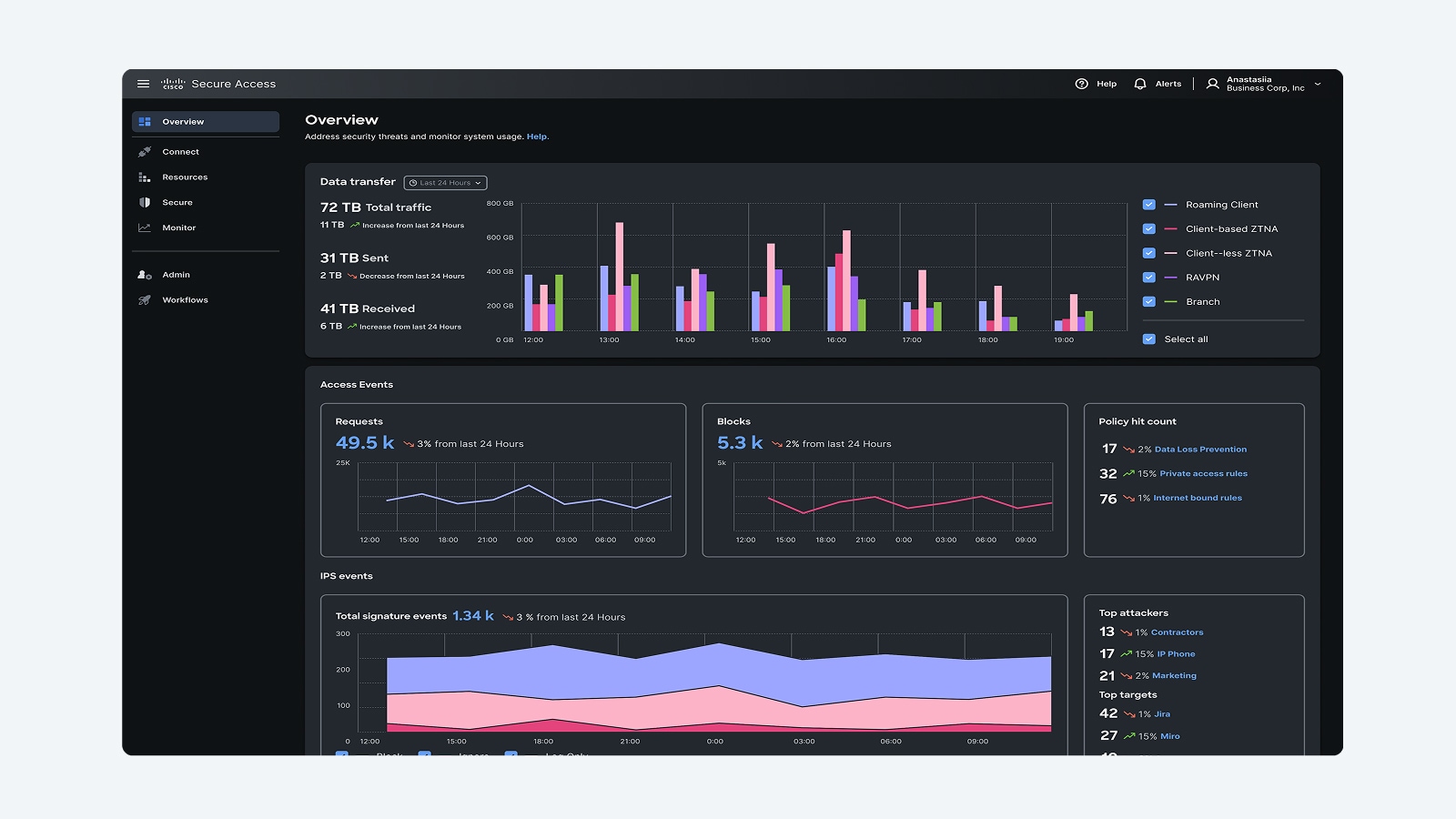 Guides
Zscaler vs Cisco Secure Access: SSE Platforms Compared
Zscaler vs Cisco Secure Access weighs proxy-first SSE maturity against a converged platform built on Umbrella and Duo for teams migrating off traditional VPN and AnyConnect.
July 11, 2026 · 5 min read Guides
Cisco vs Arista: Switching Platforms Compared
Cisco vs arista isn't close in every category: Arista's EOS and CloudVision lead hyperscale and AI-fabric leaf-spine switching, while Cisco counters with campus-to-data-center breadth and TAA depth.
July 11, 2026 · 5 min read Guides
Cisco UCS C24 M3 EoL: Migrate to UCS C240 M7
The UCS C24 M3 (UCSC-C24-M3S) passed last day of support on April 30, 2020. Here is the concrete refresh path to the UCS C240 M7, DDR5, PCIe Gen5, Intersight, and TAA-compliant procurement.
June 4, 2026 · 7 min readGuidesCisco UCS C22 M3 EoL: Migrate to UCS C220 M7 Refresh Guide
The Cisco UCS C22 M3 (UCSC-C22-M3S) hit Last Day of Support on April 30, 2020, no patches, no TAC, no RMA. Here is a practical, spec-driven plan to migrate this entry-level 1RU server to the current-generation UCS C220 M7.
June 2, 2026 · 7 min readGuidesCisco UCS C420 M3 EoL: Migrate to UCS C240 M7
The four-socket UCS C420 M3 passed Last Day of Support on February 28, 2021. Here is why it has to come out of the rack and how to consolidate it onto the dual-socket UCS C240 M7 without losing capacity.
May 25, 2026 · 6 min readGuidesCisco UCS 5108 (N20-C6508) EoL: Migrate to UCS X9508
The UCS 5108 blade chassis passed Last Day of Support on November 30, 2021. Here is what that means for an operating data center and how to migrate cleanly to the modular UCS X9508 X-Series chassis.
May 3, 2026 · 9 min read