
WS-C3560X-48P-S End of Life: Migration to the Catalyst 3650
A practical refresh guide for retiring the Catalyst 3560-X 48-port PoE IP Base (WS-C3560X-48P-S) and moving to the Catalyst 3650, with the licensing, uplink, and decommission detail US public-sector and enterprise teams actually need.
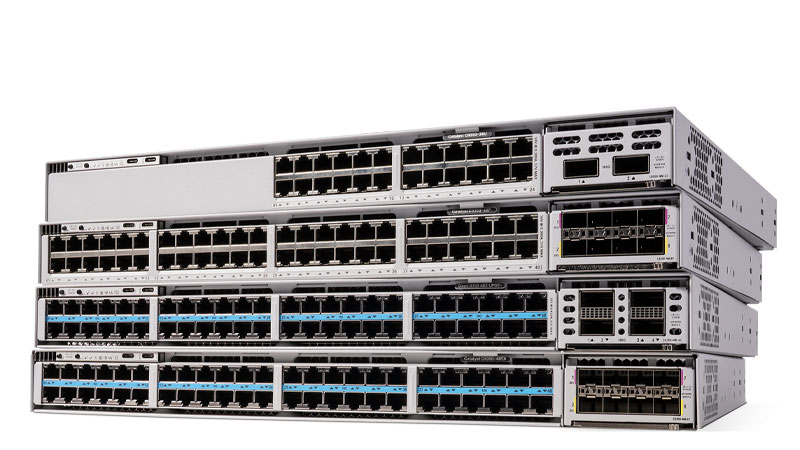
If you still have Cisco Catalyst 3560-X 48-port PoE switches (PID WS-C3560X-48P-S) carrying access-layer traffic, you are running hardware that Cisco stopped selling on October 30, 2016 and stopped supporting entirely on October 31, 2021. There are no more software maintenance releases, no PSIRT security fixes, and no TAC or RMA path. For a federal, DoD, SLED, or healthcare network, that is not a deferred maintenance item, it is an active compliance and security exposure that grows every quarter the box stays in the rack. This guide explains exactly what the 3560-X end-of-life milestones mean, why the Catalyst 3650 is the named successor and what it concretely buys you, and how to run the refresh without breaking your access layer.
Why the 3560-X end of life matters now
The 3560-X was the standalone, non-stacking 48-port PoE workhorse of its generation, the fixed counterpart to the stackable 3750-X. It shipped with the classic Cisco IOS train (12.2(55)SE / 15.x), perpetual IP Base or IP Services feature licensing, and optional C3KX uplink and StackPower modules. It was a genuinely good switch. But Last Day of Support (LDoS) passed in October 2021, and that date is the one that ends the conversation.
Past LDoS, Cisco's Product Security Incident Response Team will not issue a fixed release for this platform no matter how severe the vulnerability. When a critical IOS advisory lands, and they continue to land against this code base, your only options are a workaround or replacement, never a patch. That breaks the core control in nearly every framework auditors hold you to: NIST 800-53 SI-2 (flaw remediation), the CMMC and FedRAMP requirements that inherit it, HIPAA Security Rule technical safeguards, and PCI DSS for any cardholder segment. An unsupported, unpatchable switch in scope is a finding waiting to be written.
What each milestone actually means
- End of Sale (30 Oct 2016): Cisco stopped taking new orders. Anything you still run was deployed before this date or bought on the secondary market.
- End of SW Maintenance (30 Oct 2017): the last date Cisco released bug-fix and maintenance IOS images. After this, even non-security defects went unfixed.
- Last Day of Support / LDoS (31 Oct 2021): the hard stop. No TAC cases, no RMA hardware replacement, no security fixes, no entitlement to software downloads. The switch is on its own.
The recommended replacement, and what is genuinely better
Cisco's EoL bulletin names the Catalyst 3650 48-port PoE 2x10G as the successor, and the closest like-for-like SKU is the WS-C3650-48PD-S, 48 ports of PoE+ with two fixed 10 Gigabit SFP+ uplinks, IP Base. It is the right reference point for parity planning, with three concrete upgrades over the 3560-X:
- Uplinks: fixed 2x10G SFP+ on the -48PD versus the 3560-X's GbE-default access with optional 10G modules. Your distribution-layer uplink moves from 1G/optional-10G to native 10G, removing the most common access-layer bottleneck.
- Stacking: the 3650 supports StackWise-160 (160 Gbps), true data stacking the standalone 3560-X never had. You can collapse a closet of independent 3560-X boxes into one managed logical switch with a single config and management IP.
- Software platform: the 3650 runs IOS-XE, not classic IOS, a Linux-based, modular OS with patchable subsystems, model-driven telemetry, and a far healthier security-fix pipeline.
- PoE budget: the 3650-48PD ships with a 640W PoE+ budget, field-upgradable toward 1100W, with full 802.3at (30W) per-port capacity for current-gen APs, phones, and cameras.
The licensing change you must plan for
This is the single biggest difference and the one teams underestimate. The 3560-X used perpetual right-to-use feature licenses (IP Base / IP Services) tied to the chassis, buy it once, own it forever. The 3650 moved to the Network Stack model (IP Base / IP Services, later mapped to Network Essentials / Network Advantage) administered through Cisco Smart Licensing and DNA Center subscriptions. Entitlement is now an account-level, term-based construct, not a sticker on the box. Budget for the subscription and a Smart Account, and decide your tier before you order, IP Base for Layer 2 plus basic Layer 3, IP Services if you need full dynamic routing.
A practical migration plan
1. Assess and inventory
Pull an exact count of WS-C3560X-48P-S units, serials, and current IOS versions, and capture each device's role: pure access, or access with Layer 3 (HSRP, OSPF, EIGRP). Run 'show power inline' to capture real PoE draw per closet so you size the 3650 budget against actual load, not nameplate. Inventory the uplink optics and module types you depend on, C3KX-NM-10G modules, StackPower cables, GLC/SFP-10G transceivers.
2. Map config and feature parity
Most IOS access configuration, VLANs, trunks, port security, 802.1X/MAB, QoS policy, ACLs, ports across to IOS-XE with minor syntax adjustments, but it is not a blind copy-paste. Validate QoS (IOS-XE uses MQC consistently), any SDM template assumptions, and Layer 3 features against your licensed tier. If you used IP Services routing on the 3560-X, confirm the equivalent on the 3650 and license accordingly. Stage and test each closet's config on a bench 3650 before cutover night.
3. Physical, power, and uplinks
The 3650-48PD is a 1RU switch like the 3560-X, so rack space is a wash, but verify circuit capacity: the higher 10G uplink and PoE+ ceiling can change the power profile of a fully loaded closet. Plan optics explicitly, the 3650's fixed SFP+ uplinks need SFP-10G transceivers and the matching distribution-side ports/fiber. Where you are consolidating multiple standalone 3560-X units, design the StackWise-160 cabling so a closet becomes one logical switch.
4. Phased cutover
Migrate by closet or IDF, never the whole building at once. Pre-stage the 3650 (or stack) beside the live 3560-X, load the validated config, then move uplinks and edge ports during a maintenance window. Keep the old unit racked and powered-off-but-present for a defined rollback window before you pull it. Verify endpoints, PoE devices, 802.1X authentication, and routing adjacencies before declaring the closet done.
5. Secure decommission
Do not let retired switches walk out the door with config intact. Wipe startup-config and any stored credentials, certificates, and RADIUS keys; reset to factory defaults. For DoD and federal environments, follow your sanitization standard (e.g., NIST 800-88) and capture serial-number disposition for the property record. An authorized partner can handle certified data sanitization, asset recovery, and trade-in credit toward the new gear.
Procurement notes for government and enterprise buyers
- TAA compliance: buy new from an authorized source so the replacement is provably TAA-compliant for federal contracts, gray-market 3650/9300 units routinely fail provenance checks.
- GPC and purchasing paths: micro-purchase via Government Purchase Card, Simplified Acquisition, and FAR-based purchase orders are supported; if your office buys through a GWAC/IDIQ holder, we structure the BOM so it drops into that order cleanly.
- Lead times: access switches move in and out of constraint. Confirm current lead time and PoE PSU availability before you finalize the cutover schedule.
- Smart Account first: stand up or confirm your Cisco Smart Account up front so DNA/Smart Licensing entitlements land cleanly on day one.
- Authorized partner sourcing: buying through an authorized Cisco partner guarantees genuine hardware, valid entitlement, and a clean support and warranty chain.
You can review the full lifecycle record for this unit on our WS-C3560X-48P-S end-of-life page or check your broader fleet against the Cisco EoL hub, and browse the replacement and its current-generation alternatives in our catalog. When you are ready to size it against your actual closet counts, PoE load, and contract vehicle, request a refresh quote and our team will return a validated, TAA-compliant proposal.
Frequently asked questions
Is the Cisco Catalyst 3560-X (WS-C3560X-48P-S) still supported?
No. It reached Last Day of Support on October 31, 2021. Cisco no longer provides TAC cases, RMA hardware replacement, software downloads, or PSIRT security fixes for this platform. Any new IOS vulnerability that affects it will never receive a patch, which makes it an audit and security exposure in regulated environments.
What is the recommended replacement for the WS-C3560X-48P-S?
Cisco's bulletin names the Catalyst 3650, and the closest match is the WS-C3650-48PD-S: 48 PoE+ ports with two fixed 10G SFP+ uplinks. It adds native 10G uplinks, StackWise-160 stacking, IOS-XE, and a current PoE+ budget. Note the 3650 is itself end-of-sale with LDoS in October 2026, so for a long horizon ask us to price the current Catalyst 9300L (C9300L-48P-4X) in parallel.
How does licensing change moving from the 3560-X to the 3650?
The 3560-X used perpetual chassis-tied feature licenses (IP Base / IP Services). The 3650 uses Cisco Smart Licensing with term-based Network Essentials/Advantage entitlements administered through a Smart Account and DNA Center. You should stand up a Smart Account and choose your tier before ordering, and budget for the subscription as an ongoing cost rather than a one-time purchase.
Can I reuse my 3560-X optics and uplink modules on the 3650?
Plan on new optics. The 3560-X used optional C3KX uplink modules with their own transceivers, while the 3650-48PD has fixed 10G SFP+ uplink ports that need SFP-10G transceivers. StackPower and FlexStack-style modules from the 3560-X/3750-X generation do not carry over; the 3650 uses StackWise-160 with its own cabling.
Is the Catalyst 3650 replacement TAA compliant for federal contracts?
New Catalyst 3650 and 9300 hardware sourced through an authorized Cisco partner is TAA compliant and suitable for federal, DoD, and SLED contracts. Gray-market or used units frequently cannot prove country-of-origin and provenance, so buy new from an authorized source and we will document compliance for your contract vehicle.
Uniqcli Team
The Uniqcli Team is an authorized Cisco partner specializing in Catalyst wireless, switching, datacenter fabric, licensing, and managed services for U.S. federal, state, local, and education customers. We scope Cisco bills of materials, validate procurement paths (TAA, FIPS, contract vehicles), and deliver design, deployment, and managed operations.
Ready to scope your Cisco build?
Build a quoteRelated reading
View all →GuidesWS-C3560X-24P-S End of Life: Migration to Catalyst 3650
The Catalyst 3560-X 24-port PoE IP Base passed last day of support in 2021; here is a concrete plan to refresh onto the Catalyst 3650 WS-C3650-24PD-S and beyond.
October 31, 2025 · 7 min readGuidesWS-C3650-48PD-S End of Life: Migrate to Catalyst 9300L
A practical refresh guide for moving the Catalyst 3650 48-port PoE switch (WS-C3650-48PD-S) to the Catalyst 9300L before the October 31, 2026 last day of support.
November 5, 2025 · 7 min read Guides
Cisco Catalyst 3560V2 (WS-C3560V2-48PS-S) to Catalyst 9200 Migration Guide
The WS-C3560V2-48PS-S reached Last Day of Support on May 31, 2021, no PSIRT patches, no TAC, no RMA. Here is a practical, specs-driven plan to migrate from the Fast Ethernet 3560V2 to the gigabit, IOS-XE Catalyst 9200 (C9200-48P-A).
May 13, 2026 · 7 min readGuidesWS-C3560CX-8PC-S Replacement & Migration to Catalyst 9000
The Catalyst 3560-CX 8-port PoE (WS-C3560CX-8PC-S) is End-of-Sale, here is how to migrate to the Catalyst 9000 Compact C9200CX-8P-2X2G-A before support ends.
October 29, 2025 · 7 min readGuidesWS-C3750X-48P-S End of Life: Migration to Catalyst 3850
A practical refresh guide for replacing the fully end-of-support Cisco Catalyst 3750-X 48-port PoE switch (WS-C3750X-48P-S) with the Catalyst 3850, including specs, licensing, and a phased cutover plan.
November 11, 2025 · 7 min readGuidesCisco Catalyst 4948 (WS-C4948-S) EoL: Migrate to Catalyst 9300
The WS-C4948-S passed Last Day of Support on Jan 31, 2020. Here is why this top-of-rack workhorse has to come out and how to refresh cleanly to a stackable Catalyst 9300 (C9300-48T-A).
June 5, 2026 · 8 min read