
NAC for BYOD, Guest, and IoT: Securing Every Device That Touches the Network
A NAC solution turns BYOD, guest, IoT, and posture into four policies on one platform. Here is how Cisco ISE delivers each scenario, mapped to license tiers and zero-trust outcomes.
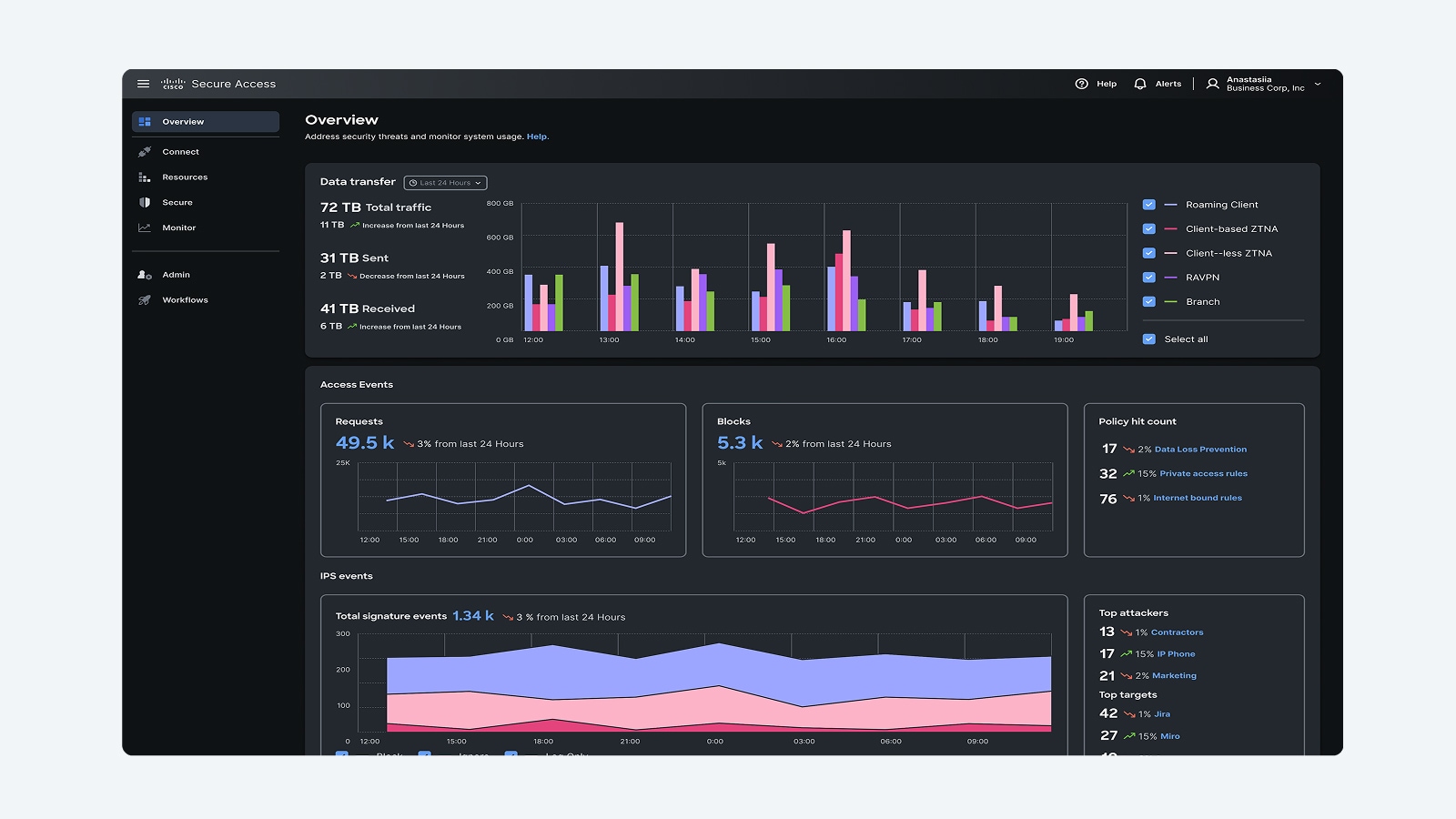
Every device that joins your network is a decision. A contractor's laptop, an employee's personal phone, a guest's tablet, a wireless infusion pump, a badge reader, a smart TV in a conference room: each one is either an authenticated, policy-bound participant or an unmanaged hole in your perimeter. Network Access Control (NAC) is how you make that decision deliberately, at the moment of connection, instead of discovering it later in an incident report.
This guide walks through the four real-world scenarios that drive most NAC projects: bring-your-own-device (BYOD) onboarding, guest access, IoT and OT device onboarding, and continuous posture checking. For US federal, DoD, SLED, healthcare, and enterprise buyers, Cisco delivers all four through the Identity Services Engine (ISE), and we will show concretely how each scenario maps to ISE capabilities, licensing tiers, and zero-trust outcomes.
What a NAC solution actually controls
At its core, a NAC solution answers three questions before any endpoint reaches the corporate LAN or WLAN: who or what is this, is it healthy enough to connect, and what should it be allowed to touch. Cisco positions ISE as the policy decision point that gathers context from across the security stack, authenticates the user and device, and enforces an outcome at the switchport or access point. That outcome can be full access, a restricted VLAN, a quarantine, or an outright denial.
The reason this matters is simple: identity-based local network access is the foundation of zero trust at the network layer. A firewall protects the edge and a ZTNA service protects application access, but neither one decides whether a device should get an IP address and a path into the campus in the first place. That is the job of Cisco ISE, which enforces IEEE 802.1X and MAC Authentication Bypass (MAB) across wired, wireless, VPN, and 5G connections and shares the resulting context with the rest of your Cisco security stack.
The four NAC scenarios at a glance: BYOD onboarding (self-service enrollment of personal devices), guest access (visitors and contractors kept separate from employees), IoT and OT onboarding (profiling and segmenting devices that cannot run a supplicant), and posture (verifying device health before and during a session). One ISE deployment delivers all four, with the right capabilities unlocked by the Essentials, Advantage, and Premier license tiers.
BYOD network access control: onboarding personal devices safely
BYOD is where most organizations first feel the pain of having no NAC. Employees want to use their own laptops, tablets, and phones, but those devices arrive with no certificate, no known posture, and no membership in your management system. The wrong answer is a shared pre-shared key that never rotates. The right answer is self-service onboarding that provisions identity to the device at first connection.
How ISE handles BYOD enrollment
With BYOD network access control in ISE, an employee connecting a personal device is redirected to a self-service portal, authenticates with their corporate identity (including SAML 2.0 to an external identity provider when configured), and ISE then provisions the native supplicant and enrolls a certificate through its built-in certificate authority. From that point forward the device authenticates with EAP-TLS rather than a password, which is both more secure and far less fragile than reusing a single shared key. The whole flow is designed to reduce help-desk tickets, because the employee does the onboarding themselves within guardrails you define.
- Self-service device registration and supplicant provisioning, so users enroll without opening a ticket.
- Automated certificate enrollment via the internal CA with OCSP-based revocation, moving BYOD off passwords and onto EAP-TLS.
- Per-device authorization that separates a personal phone from a corporate-managed laptop on the same identity.
- Integration with Active Directory and Microsoft Entra ID so onboarding respects existing group membership and conditional rules.
BYOD enforcement and the AI-driven profiling that backs it live in the ISE Advantage tier, which adds endpoint profiling, group-based segmentation, and context sharing on top of the core authentication in Essentials. That tiering matters for budgeting, because you license the capabilities you actually deploy. Because the tiers are nested, Advantage also carries forward every Essentials capability, so a single deployment can serve guest, BYOD, and segmentation use cases at once.
Guest network access without standing up parallel infrastructure
Guest access looks simple until you scale it. A lobby kiosk for one visitor is easy; sponsored access for hundreds of contractors across multiple sites, each with a defined expiration and an audit trail, is not. The goal of guest network access is to give visitors, vendors, and contractors a usable connection while keeping their privileges strictly separate from employees and from sensitive internal resources.
Portals, sponsors, and lifecycle
ISE ships customizable guest portals in three flavors: open hotspot for low-friction visitor Wi-Fi, self-registration where the guest creates a time-bound account, and sponsored access where an employee vouches for and provisions a visitor. Each guest account carries a lifecycle (creation, activation, expiration, and purge) and a complete record of who sponsored whom, which is exactly what auditors and security reviews ask for. Because guests land on their own segment, a compromised visitor laptop never has a path to the systems your staff use.
- Hotspot, self-service, and sponsored portals you can brand to match the organization.
- SAML 2.0 support so guests can authenticate through an external identity provider when appropriate.
- Time-bound accounts with automatic expiration and full sponsor audit trails.
- Segmentation that keeps non-employee traffic isolated from employee and data-center resources.
Guest access is available starting at the ISE Essentials tier alongside core 802.1X and AAA, so even a baseline NAC deployment can retire insecure shared guest passwords on day one. The same self-registration and sponsored-portal workflows that serve walk-in visitors also handle long-running contractor populations, with each account expiring on schedule so stale credentials never linger on the network.
IoT device onboarding: profiling what cannot authenticate itself
IoT and OT devices break the assumptions BYOD relies on. A networked camera, a building sensor, an industrial controller, or a connected medical device usually cannot run an 802.1X supplicant and cannot tell you what it is. Left unmanaged, these devices become the soft entry point attackers love. Effective IoT device onboarding means discovering each device, classifying it accurately, and confining it to a segment that matches its purpose.
AI/ML profiling and MAC Authentication Bypass
ISE profiles endpoints automatically using predefined and custom device templates plus a cloud-based Multi-Factor Classification (MFC) machine-learning engine that fingerprints unknown IoT, medical, and OT devices by manufacturer, model, operating system, and endpoint type. For devices that genuinely cannot authenticate, MAB allows controlled access keyed to the device identity rather than a credential, while profiling raises classification fidelity so policy is applied correctly. AI Endpoint Analytics pushes that fidelity further for environments with large, diverse device populations.
Segmenting IoT with TrustSec Security Group Tags
Classification is only half the answer. The other half is containment. ISE uses TrustSec Security Group Tags (SGTs) to apply micro- and macro-segmentation by intent rather than by IP address, so a fleet of cameras or a set of clinical devices can be isolated from everything that does not need to talk to them. That segmentation limits lateral movement, shrinks the attack surface, and reduces compliance scope. In healthcare specifically, this is how teams protect connected medical devices on a converged clinical network and strengthen ransomware resilience without re-architecting the physical network. The same approach extends to manufacturing and critical infrastructure, where profiling and SGT segmentation keep operational technology separated from the IT estate.
Why segmentation beats a flat VLAN: IP-based VLANs grow brittle as device counts climb and topology changes. TrustSec SGTs attach policy to the device's role and follow it across switches, routers, wireless, and firewalls. When ISE reclassifies or quarantines an endpoint, the tag changes and enforcement updates everywhere, no ACL rewrite required.
Cisco ISE profiling and posture: keeping healthy devices healthy
Authentication answers who is connecting. Posture answers whether the connecting device is safe to let in and stay in. The combination of Cisco ISE profiling and posture is what turns NAC from a one-time gate into continuous, context-aware enforcement that aligns with the CISA Zero Trust Maturity Model pillars for identity and devices.
What posture checks evaluate
Through Cisco Secure Client (formerly AnyConnect) in full, temporal, or agentless modes, ISE evaluates endpoint health against policy you set: OS patch level, antivirus and antimalware status, disk encryption, registry settings, jailbreak or root status, and USB media controls. Non-compliant devices can be redirected to remediation and re-checked before they earn full access. Posture visibility and enforcement, along with MDM and EMM posture integration with platforms such as Microsoft Intune and Jamf, sit in the ISE Premier tier.
Threat-Centric NAC and automated containment
Premier also adds Threat-Centric NAC (TC-NAC), which ingests CVSS vulnerability and threat scores from tools such as Tenable and changes a device's access automatically when its risk profile crosses a threshold. Paired with Rapid Threat Containment and Adaptive Network Control through pxGrid, ISE can quarantine, bounce, or shut down a compromised endpoint's port on demand or in response to an alert from the broader security stack. This is the network acting as an active line of defense rather than a passive pipe, and it is where ISE context feeds directly into platforms like Cisco XDR for cross-vector correlation.
- Posture checks for patch level, AV/AM, disk encryption, registry state, and jailbreak/root status.
- Automatic remediation and re-assessment so users are guided back to compliance.
- MDM/EMM posture via Intune and Jamf for managed mobile fleets (Premier tier).
- TC-NAC and Rapid Threat Containment to quarantine or restrict devices based on live vulnerability and threat scores.
Matching scenarios to ISE license tiers
Because ISE tiers are nested, each higher level includes everything below it, so you scope the license to the scenarios you intend to run. Understanding the mapping prevents both over-buying and the unpleasant surprise of a missing capability mid-project.
- Essentials: core 802.1X and AAA/RADIUS, MAB, and guest access (hotspot, self-registration, sponsored). Enough to deliver secure guest and basic authenticated access.
- Advantage: adds endpoint profiling and AI Endpoint Analytics enforcement, TrustSec/SGT segmentation, BYOD onboarding, pxGrid context sharing, and Rapid Threat Containment. This is the tier most IoT onboarding and BYOD projects need.
- Premier: adds posture visibility and enforcement, MDM/EMM posture (Intune, Jamf), and Threat-Centric NAC. The tier for continuous compliance and automated, vulnerability-driven containment.
- Device Administration: a separate TACACS+ license for command-level administration and audit of switches, routers, and firewalls, licensed independently of the endpoint tiers.
Deployment is flexible enough to fit regulated and hybrid environments: ISE runs on the Cisco Secure Network Server appliance, as a virtual machine on VMware ESXi, KVM, Hyper-V, Nutanix AHV, or Red Hat OpenShift, and in AWS, Azure, Oracle Cloud, and Google Cloud. Distributed, multi-node clusters combine physical and virtual nodes for scale, redundancy, and failover across sites. Regulated and air-gapped sites can keep policy fully on-premises, which is often the deciding factor against cloud-only NAC products.
Compliance considerations for public-sector buyers
For federal, DoD, and SLED buyers, ISE is a foundational zero-trust building block, mapping to the identity and device pillars of the CISA Zero Trust Maturity Model and supporting agency mandates for 802.1X, segmentation, and continuous compliance. Per Cisco documentation, ISE is designed to meet FIPS 140 (140-2 or 140-3 depending on release), Common Criteria via the Network Device Collaborative Protection Profile (NDcPP), and UC APL / DoDIN APL requirements, with release 3.5 adding full single-stack IPv6 support and administrator authentication via DoD Common Access Card (CAC) and smart card.
Certifications vary by release, so the exact certified version should be confirmed at quote time, and note that ISE itself is not a FedRAMP-authorized cloud service. As an authorized Cisco partner, Uniqcli can source TAA-compliant Secure Network Server appliances and the appropriate ISE licensing through GSA and other government purchasing vehicles, confirm the FIPS, Common Criteria, and UC APL status of the specific release, and support Government Purchase Card (GPC) eligible procurement. The practical takeaway is to scope the SKU and certification posture before purchase rather than assume a given authorization level.
Next step: scope your NAC deployment
BYOD, guest, IoT, and posture are not four separate products; they are four policies on one platform. If you can authenticate every user and device, profile what cannot speak for itself, segment by intent, and check health continuously, you have closed the largest gap in most networks. Start by reading the network access control pillar to see how the pieces fit, then review capabilities and deployment options in detail. When you are ready to size appliances, licensing tiers, retention, and compliance for your environment, request a quote and our team will scope a TAA-compliant, GPC-eligible configuration. You can browse hardware on the catalog or go straight to a tailored quote.
Frequently asked questions
What is the difference between NAC and a firewall?
A firewall controls traffic between networks and at the perimeter, deciding which packets may pass. NAC, delivered by Cisco ISE, controls which users and devices may join the network in the first place, at the switchport or access point. NAC authenticates and profiles the endpoint, checks its posture, and assigns it to the correct segment, then shares that context with firewalls and other tools. The two are complementary layers of a zero-trust architecture rather than substitutes.
Can Cisco ISE onboard IoT devices that cannot run 802.1X?
Yes. For devices that cannot run a supplicant, ISE uses MAC Authentication Bypass keyed to the device identity, and its cloud-based Multi-Factor Classification machine-learning engine profiles the device by manufacturer, model, OS, and type. ISE then applies a TrustSec Security Group Tag to confine the device to an appropriate segment. This is how organizations onboard cameras, sensors, controllers, and connected medical devices safely.
Which ISE license tier do I need for BYOD and posture?
BYOD onboarding and endpoint profiling enforcement live in the ISE Advantage tier, which also adds TrustSec segmentation, pxGrid context sharing, and Rapid Threat Containment. Posture assessment and enforcement, MDM and EMM posture with Intune or Jamf, and Threat-Centric NAC require the top Premier tier. The tiers are nested, so Premier includes everything in Advantage and Essentials. Uniqcli can scope the right tier for your scenarios.
How does NAC support a zero-trust architecture?
NAC is the enforcement point for network-level zero trust. Cisco ISE authenticates every user and device before granting access, continuously verifies posture, and enforces least-privilege access with Security Group Tag segmentation. This maps directly to the identity and device pillars of the CISA Zero Trust Maturity Model. ISE also feeds its identity and device context to the wider security stack, including Cisco XDR, so policy and detection stay aligned.
Is Cisco ISE suitable for federal and DoD networks?
ISE is widely deployed across US federal, DoD, and SLED environments as the network zero-trust enforcement point. Per Cisco documentation it is designed to meet FIPS 140, Common Criteria (NDcPP), and UC APL or DoDIN APL requirements, with CAC and smart-card administrator authentication and full IPv6 support in recent releases. Certifications vary by release, so confirm the certified version at quote time. As an authorized Cisco partner, Uniqcli sources TAA-compliant appliances through compliant channels.
Can ISE run on-premises instead of in the cloud?
Yes. ISE runs on the Cisco Secure Network Server physical appliance, as a virtual machine on VMware, KVM, Hyper-V, Nutanix AHV, or Red Hat OpenShift, and in AWS, Azure, Oracle Cloud, and Google Cloud. Regulated and air-gapped environments can keep policy entirely on-premises, which is a key advantage over cloud-only NAC products that require devices to depend on an external service.
Uniqcli Team
The Uniqcli Team is an authorized Cisco partner specializing in Catalyst wireless, switching, datacenter fabric, licensing, and managed services for U.S. federal, state, local, and education customers. We scope Cisco bills of materials, validate procurement paths (TAA, FIPS, contract vehicles), and deliver design, deployment, and managed operations.
Ready to scope your Cisco build?
Build a quoteRelated reading
View all → Guides
Cisco ISE Deployment Checklist: Planning, Personas, 802.1X, Posture, and TrustSec
A field-tested planning sequence for Cisco Identity Services Engine, node personas, 802.1X rollout, posture, and TrustSec segmentation, built for federal, SLED, and healthcare teams who cannot afford a noisy cutover.
June 1, 2026 · 11 min read Guides
ISE vs ClearPass vs Forescout: The Three-Way NAC Shootout
Cisco ISE vs Aruba ClearPass vs Forescout is really two questions, ecosystem fit and authentication-first vs visibility-first, not one three-way bake-off. Here's how to tell which applies.
July 11, 2026 · 5 min read Guides
What Is Network Access Control (NAC)? A Plain-English Guide to NAC Solutions
Network access control decides who and what gets on your network, checks whether they are safe, and contains them if they are not. This guide explains what is NAC, how a modern NAC solution works, and how Cisco implements it.
June 6, 2026 · 12 min read Guides
Zero Trust with Cisco ISE: identity-based access, explained
Zero trust falls apart when the network still trusts a switch port. Cisco Identity Services Engine moves the trust decision to who and what is connecting, then carries that decision across wired, wireless, and the firewall as enforceable policy.
May 18, 2026 · 11 min read Compliance
NAC and Network Segmentation for Federal Zero Trust: Meeting CISA and DoD Mandates
How Cisco NAC, TrustSec segmentation, and XDR deliver network access control compliance against the CISA Zero Trust Maturity Model and DoD Zero Trust Strategy, and what federal and SLED buyers should verify before they purchase.
June 2, 2026 · 12 min readGuidesCisco ISE vs Forescout: NAC and Device Visibility Compared
Forescout vs Cisco ISE is a contest between two philosophies: 802.1X-first policy versus agentless-first visibility. Which fits depends on how much of your fleet can run a supplicant.
July 11, 2026 · 5 min read