
Multicloud fabric: connecting federal workloads across clouds without losing control
Federal teams run workloads across AWS, Azure, Google Cloud and on-prem at the same time. A multicloud fabric gives you one consistent policy, segmentation, and visibility layer so the mission moves between clouds without the control plane fracturing or the ATO slipping.
Key takeaways
- Multicloud is already the federal default. The job is not picking one cloud, it is governing several at once with a single policy and identity model so security posture does not drift between providers.
- A fabric is a control layer, not a product SKU. It stitches together routing, segmentation, encryption, and telemetry across clouds and the data center so one intent maps to every enforcement point.
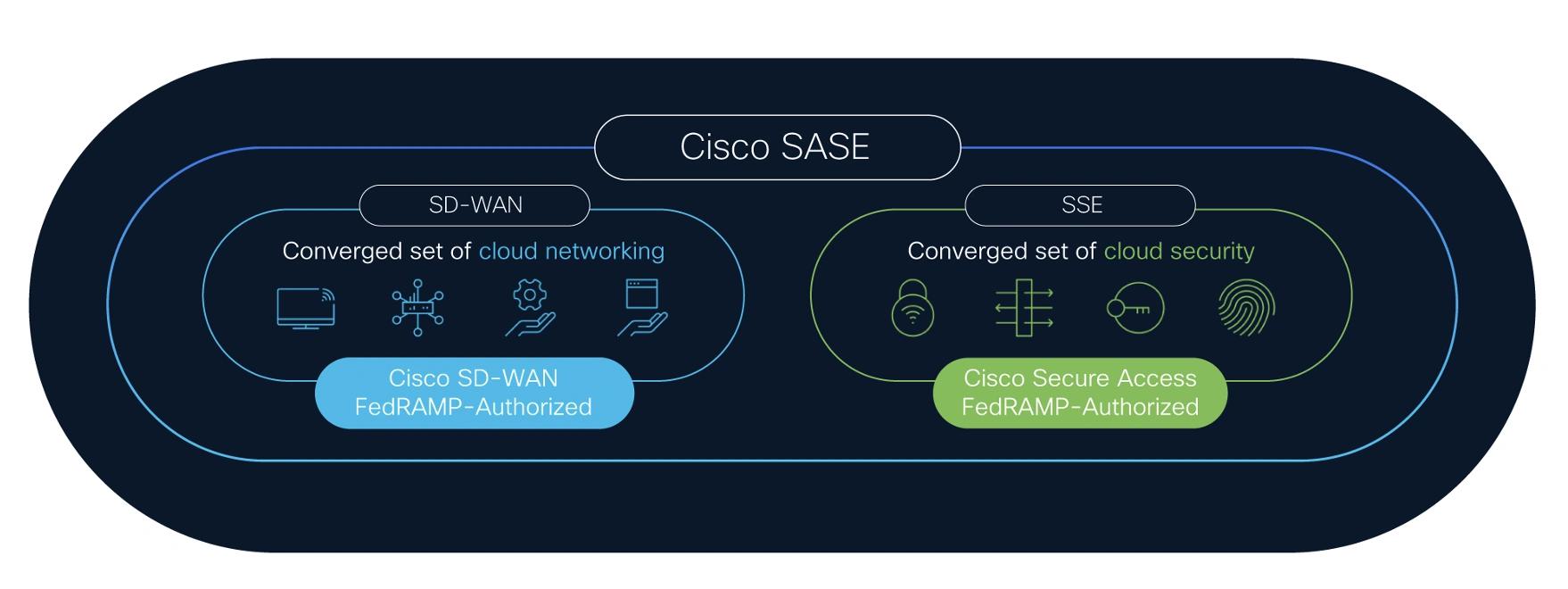
- Cisco assembles the fabric from named building blocks: Multicloud Defense and Secure Firewall for east-west and egress control, SD-WAN for transport, ThousandEyes for cross-cloud visibility, and ISE for identity.
- Compliance has to be built in, not bolted on. NIST SP 800-53 controls and DISA STIGs apply per cloud, and a unified fabric is what makes continuous monitoring and a clean ATO realistic.
- Procurement still decides the timeline. TAA status, lifecycle status, purchase path, and SmartNet coverage need to be locked against exact SKUs before the architecture is real.
The federal cloud is already plural, and that is the real problem
Almost no federal program runs in a single cloud anymore. A civilian agency might host citizen-facing apps in one commercial cloud, keep analytics in a second, run a SaaS mission system in a third, and still operate a classified or sensitive enclave on premises. That spread is not an accident or a procurement failure. It comes from mission owners buying the best fit for each workload, from acquisition rules that reward competition, and from the simple fact that no one provider covers every accreditation boundary a federal mission touches.
The trouble starts when each cloud brings its own networking model, its own security groups, its own identity quirks, and its own logging format. Policy that is airtight in AWS does not automatically translate to Azure, and the gaps between providers are exactly where lateral movement, misconfigured egress, and shadow data flows hide. Teams end up maintaining three or four parallel control planes by hand, which is slow, error-prone, and very hard to defend in an audit.
A multicloud fabric is the answer to that fragmentation. Instead of governing each cloud as an island, you lay a consistent connectivity, segmentation, and visibility layer across all of them and the data center underneath. The goal is one expression of intent that every cloud enforces the same way, so the mission can move between providers without the operators losing the thread. Our cloud and multicloud networking practice exists for exactly this seam between providers.
What a fabric actually is, and what it is not
The word fabric gets overused, so it is worth being precise. A multicloud fabric is a control layer, not a single appliance or a license you buy once. It is the combination of routing, encryption, segmentation, identity, and telemetry that makes a workload behave the same whether it lands in a commercial region or a private rack. When it is built right, an operator writes a policy once, in business terms, and the fabric pushes that intent down to native enforcement points in each environment.
Think of it in four planes. The connectivity plane handles how clouds reach each other and the on-prem core, usually over encrypted overlays rather than brittle point-to-point tunnels. The policy plane defines who and what may talk to whom, expressed as segmentation and microsegmentation rather than raw IP rules. The identity plane decides which users, devices, and workloads are trusted, and the visibility plane proves what is actually happening end to end. A fabric that is missing any one of those planes is not a fabric, it is a pile of tunnels.
The practical payoff is operational, not just architectural. When segmentation and egress are governed centrally, a change that would have meant editing security groups in three consoles becomes one policy push. That is the difference between a control plane your team can defend and one that quietly rots between providers. Vendor-neutral standards bodies like the IETF, which maintains IPsec, BGP, and VXLAN, and the IEEE for Ethernet and MACsec keep the underlying transport and encryption interoperable, which is what lets a single fabric span providers in the first place.
The Cisco building blocks that make the fabric real
Cisco does not sell a box stamped multicloud fabric, and any vendor that claims a single product covers it is overselling. What Cisco offers is a set of named components that fit together into the four planes above, which matters for federal buyers who need every part to map to a real SKU, a real lifecycle, and a real support contract. The architecture is assembled, not purchased off a shelf, and that assembly is most of the engineering work.
For east-west and egress control across clouds, Cisco Multicloud Defense and the Secure Firewall family carry the policy plane. Check the licensing SKU when you quote it: the older Defense Orchestrator bundle (CDO-SEC-SUB) that covered Multicloud Defense reached end of sale on June 30, 2026, and new orders use the Multicloud Defense subscription (MCD-SEC-SUB) instead. The hardware anchors live in the data center and at the edge: our Secure Firewall 3100 vs 4200 comparison lays out the throughput and interface options that decide how much inspected traffic a site can sustain, and the virtual firewall instances extend the same policy model into each cloud. Our Secure Firewall and broader security pages walk through how those enforcement points get sized and placed.
The other planes round it out. Cisco Catalyst SD-WAN provides the encrypted transport and cloud on-ramps that form the connectivity plane, which we scope on the SD-WAN page. Identity Services Engine carries the identity plane so trust decisions are consistent regardless of which cloud a session lands in. Nexus Dashboard and the data center fabric give you a single operations surface over the on-prem anchor, detailed on our Nexus Dashboard and data center pages. None of these is exotic. A federal fabric should be built from supportable, accreditable parts.
Keeping control: segmentation, identity, and egress
Losing control in multicloud almost never looks dramatic. It looks like an analytics VM in one cloud quietly reaching a storage bucket in another over a path nobody documented, or a contractor identity that works in two providers and is half-deprovisioned in the third. Control is the discipline of making every one of those flows explicit, governed by policy, and observable. A fabric is what enforces that discipline instead of leaving it in a spreadsheet.
Segmentation is the backbone. In a unified fabric you define segments by mission function rather than by subnet, so a development workload cannot reach a production data store no matter which cloud each one happens to sit in. Microsegmentation tightens that down to the workload level, which is what lets you contain a compromise instead of watching it spread laterally. Identity ties it together: the fabric should treat a verified workload identity the same way in every environment, so trust is a property of the thing, not of the network it landed on.
Egress is the control most often left wide open, and it is the one auditors care about most. A fabric centralizes outbound inspection so that data leaving any cloud passes through a known, logged, policy-governed path. That is the difference between answering an incident with a clean flow record and answering it with a shrug. We treat segmentation, identity, and egress as one program rather than three projects, which is why our managed operations team owns the policy lifecycle after cutover rather than handing it back as a binder.
Visibility that survives the boundary between clouds
The fastest way to lose control of a multicloud estate is to lose sight of it. Each provider gives you native telemetry, but the formats differ, the retention differs, and crucially none of them sees the path between clouds. When a federal user complains that a mission app is slow, the answer usually lives in the seams: a degraded peering link, a saturated cloud on-ramp, a DNS resolver in the wrong region. Native cloud dashboards are blind to exactly that territory.
Cisco ThousandEyes is built for the part of the path you do not own. It measures the experience from the user, across the public internet, through the cloud edge, and into the workload, which gives operators a single source of truth that does not stop at a provider boundary. Pairing that cross-cloud view with deep on-prem telemetry is what makes a slow-app ticket a ten-minute diagnosis instead of a three-team finger-pointing exercise. Our full-stack observability practice is organized around stitching those layers into one timeline.
Visibility is also a compliance instrument, not just an operations one. Continuous monitoring obligations assume you can produce evidence of what traffic flowed, when, and under what policy, on demand. A fabric that emits consistent flow and policy telemetry across every cloud lets you answer that requirement with a query instead of a scramble before each assessment. The agencies that handle audits calmly are the ones that instrumented the boundary before the auditor asked, not after.
Compliance baked into the fabric, not bolted on after
For federal and DoD workloads, the architecture is only as good as its accreditation story. Every cloud in the estate inherits the same control catalog, and the controls in NIST SP 800-53 do not relax just because a workload moved providers. The advantage of a unified fabric is that you implement and document many of those controls once, at the fabric layer, instead of re-proving them in each cloud console. Consistent segmentation, centralized egress logging, and uniform identity are themselves control implementations, and they are far easier to assess when they look the same everywhere.
DoD and many civilian programs go further and require hardened configurations measured against the DISA STIGs. A fabric helps here too, because the enforcement points are standardized device families with known STIG baselines rather than a different config syntax per cloud. When the assessor pulls a sample, you want them to find the same hardened posture on every firewall and controller, not a patchwork that has to be explained boundary by boundary. That uniformity is what shortens the path to an authority to operate.
Lifecycle status is the compliance trap people forget. A control implemented on a platform that has hit end of support is a finding waiting to happen, so we check every component against the Cisco end-of-sale and end-of-life policy and current end-of-life milestones during design. For programs with the strictest mandates, our defense and government industry teams build the compliance packet alongside the architecture, so the ATO evidence comes out of the build itself instead of being assembled as a separate project at the end.
Procurement is where the architecture becomes real
A beautiful multicloud fabric on a whiteboard is worth nothing until the parts are bought correctly, on the right vehicle, with support attached. Federal procurement adds constraints that commercial buyers never see: Trade Agreements Act origin has to be verified per SKU, the buy has to fit a purchase path the contracting officer can actually use, and the funding color has to match the work. Getting the architecture blessed and then stalling for months on acquisition is a failure mode we see constantly, and it is entirely avoidable.
The purchase path shapes the timeline as much as the design does. Large fabric buys often ride an agency-held vehicle such as NASA SEWP or a GSA schedule through the contract holders on those vehicles. Uniqcli holds no contract vehicle today (our GSA MAS application is in progress), so what we sell directly moves on the Government Purchase Card, simplified acquisition under FAR Part 13, and FAR-based purchase orders, with WAWF invoicing for DoD. Picking the wrong path does not just cost time, it can force a re-competition. We line the bill of materials up against the path your contracting officer will use, then confirm TAA status and lifecycle on every line before anyone signs. You can start a scoped data center and fabric build with our team through a Nexus and data center quote, and our procurement and compliance practice owns the paperwork from there.
Support coverage is the last piece, and it is the one that protects the fabric over its life. Each hardware anchor needs the right level of Smart Net Total Care so a failed firewall or controller does not become a multi-week mission outage. A multicloud fabric concentrates a lot of trust into a relatively small number of enforcement points, which is precisely why their support posture cannot be an afterthought. If you want the whole estate sized, sourced, and supported as one program, request a scoped quote and we will build the bill of materials against your purchase path and your accreditation boundary.
Cisco products involved
- Cisco Multicloud Defense
- Cisco Secure Firewall 3100 Series
- Cisco SD-WAN
- Cisco ThousandEyes
- Cisco Identity Services Engine (ISE)
- Cisco Nexus Dashboard
- Cisco Smart Net Total Care
Bottom line: A multicloud fabric is how federal teams run workloads across several clouds while keeping one policy, one identity model, and one audit trail. Tell us your clouds and your accreditation boundary and we will scope the fabric, the parts, and the purchase path in one request a quote.
Frequently asked questions
Is a multicloud fabric a single product I can buy from Cisco?
No. It is an architecture assembled from named components rather than one SKU. In a Cisco-based design that typically means Multicloud Defense and Secure Firewall for policy and egress, SD-WAN for transport, ISE for identity, and ThousandEyes for cross-cloud visibility, all tied to a data center anchor. Each part maps to a real SKU, lifecycle, and support contract, which is what makes the whole thing accreditable.
How does a fabric help with our ATO and continuous monitoring?
By implementing controls once at the fabric layer instead of re-proving them in every cloud. Consistent segmentation, centralized egress logging, and uniform identity are themselves NIST SP 800-53 control implementations, and standardized enforcement points carry known DISA STIG baselines. Because the fabric emits consistent flow and policy telemetry across providers, continuous monitoring evidence can be pulled on demand instead of reassembled by hand before each assessment.
Will a multicloud fabric lock us into specific cloud providers?
The opposite. The fabric exists to keep policy, identity, and visibility consistent regardless of which provider a workload lands in, so you can place workloads by best fit and move them later without rewriting your security model. The overlay rides standard, interoperable transport and encryption, which is what lets one intent enforce the same way across AWS, Azure, Google Cloud, and on-prem.
Where do the on-prem pieces fit if most workloads are in the cloud?
The data center anchor is where centralized inspection, the policy control surface, and the highest-throughput enforcement usually live, even when most workloads run in commercial clouds. Hardware like the Secure Firewall family and the Nexus fabric give you a single operations surface and a sovereign enforcement point that you fully control. Most federal estates keep at least one sensitive enclave on premises, and the fabric is what ties it cleanly to the cloud footprint.
How do we buy a fabric through federal procurement?
Component by component, mapped to the purchase path your contracting officer can use. Large buys often ride an agency-held vehicle such as NASA SEWP or a GSA schedule through the holders of those contracts; Uniqcli holds no vehicle today, so direct purchases from us move on the Government Purchase Card, simplified acquisition under FAR Part 13, or a FAR-based purchase order, with WAWF invoicing for DoD. We verify TAA status and lifecycle on every line, match the funding to the work, and attach the right Smart Net Total Care coverage before anything is signed so acquisition does not stall the build.
Uniqcli Team
The Uniqcli Team is an authorized Cisco partner specializing in Catalyst wireless, switching, datacenter fabric, licensing, and managed services for U.S. federal, state, local, and education customers. We scope Cisco bills of materials, validate procurement paths (TAA, FIPS, contract vehicles), and deliver design, deployment, and managed operations.
Ready to scope your Cisco build?
Build a quoteRelated reading
View all → Insights
On-prem vs cloud packet core for private 5G
The packet core is the brain of a private 5G network, and where you run it shapes latency, data residency, and your security accreditation. Here is how on-prem and cloud-hosted core models actually compare for federal, healthcare, and industrial deployments.
June 6, 2026 · 10 min read Compliance
Zero Trust for federal agencies: Hypershield, ISE, and Secure Access explained
Federal mandates pushed Zero Trust from buzzword to deadline. Here is how Cisco Hypershield, Identity Services Engine, and Secure Access fit a real agency architecture, and where each one earns its place.
May 22, 2026 · 11 min read News
NewsDDoS Records Keep Falling: 22+ Tbps Attacks and How to Harden the Edge
Cloudflare says it is now mitigating multi-terabit DDoS attacks that break records in weeks, not years, peaking past 22 Tbps. Here is what changed, who is exposed, and how to harden the network edge with layered Cisco defense, capacity planning, and managed monitoring that Uniqcli scopes, sources, and runs.
June 5, 2026 · 7 min read Guides
Zero Trust with Cisco ISE: identity-based access, explained
Zero trust falls apart when the network still trusts a switch port. Cisco Identity Services Engine moves the trust decision to who and what is connecting, then carries that decision across wired, wireless, and the firewall as enforceable policy.
May 18, 2026 · 11 min read Insights
AgenticOps: what AI-driven network operations means for lean federal IT teams
Cisco is folding AI agents into the network management stack. For federal IT shops running lean, the promise is fewer manual touches on routine operations. Here is what AgenticOps actually changes, where it earns trust, and how to adopt it without giving up the controls auditors expect.
June 3, 2026 · 11 min read Insights
5 signs your federal data center isn't AI-ready
AI workloads punish the weak points in a data center that ran general-purpose apps just fine. Here are five concrete signs a federal facility is not ready for GPU clusters yet, and what to fix before the hardware arrives.
May 26, 2026 · 9 min read