
How Much Does a Cisco Wi-Fi Network Cost?
A Cisco Wi-Fi network can start from about $2,500 for a tiny site, but the access point sticker is the smallest part of the bill. Here is what licensing tiers, subscription terms, SmartNet, PoE, and install actually do to the number, and why a real quote is the only accurate figure.

Key takeaways
- A small Cisco Wi-Fi network starts from about $2,500, but that figure only covers a few access points and a basic switch, not the running cost of the system.
- The access point sticker price is the smallest line on the bill; per-AP DNA/Catalyst Center licensing and its subscription term often add as much again over the contract.
- Mid-tier Wi-Fi 6E APs run about $600-1,000 and Wi-Fi 7 (Catalyst 9170/9176) about $1,000-1,600 each, before any license is attached.
- SmartNet or Smart Net Total Care adds roughly 10-20% of hardware list per year, and on Meraki the per-device license is mandatory or the hardware stops forwarding traffic.
- PoE switching, controllers, optics, cabling, RF design, and install are real line items that the AP price never includes.
- List-price aggregators show street pricing; as an Authorized Cisco Partner, Uniqcli quotes often land below list, so an instant estimate is the only number that reflects your actual design.
So what does a Cisco Wi-Fi network actually cost?
Here is the honest starting point: a small, properly licensed Cisco Wi-Fi network starts from about $2,500. That gets a handful of entry Catalyst or Cisco Business access points, a small PoE switch to power them, and a basic license tier for a single site. If you only counted the access points, you could see numbers as low as $100-150 each for entry hardware, which is exactly why the AP sticker price is so misleading. Run the numbers on a real deployment with our instant estimate builder and the picture changes quickly.
Scale up and the indicative ranges climb in steps. Mid-tier Wi-Fi 6E access points land around $600-1,000 each, and Wi-Fi 7 hardware such as the Catalyst 9170 and 9176 runs roughly $1,000-1,600 each before a single license is attached. A multi-floor office of 30-40 access points with a controller, PoE switching, and a multi-year subscription routinely reaches the mid five figures. A campus or hospital wing can pass six figures once density, redundancy, and security are designed in properly.
The rest of this guide is about the gap between those headline numbers and the real cost. The hardware sticker is not the real cost. License tier and support change everything, and the only number that is actually accurate for your building is a quote, not an aggregator's list price.
Why the access point price is the smallest part of the bill
Every Cisco access point in the current Catalyst line carries a software entitlement that is billed separately, per AP, per year. You choose between tiers (commonly Essentials and Advantage), and that choice flows through Cisco Catalyst Center (the platform formerly known as DNA Center). Essentials covers core management and basic assurance; Advantage adds the AI-driven analytics, deeper segmentation, and policy automation that most enterprise, healthcare, and federal buyers actually want. The tier you pick can add as much as the hardware itself over the life of the contract.
This is the single biggest reason a $600 access point is never a $600 line item. Multiply a per-AP subscription across 40 access points and across a three- or five-year term and the software easily rivals or exceeds the metal. It is also why two quotes for the same AP model can differ by thousands: one priced Essentials for one year, the other priced Advantage for five.
If you are sizing Wi-Fi 7 specifically, the newest Catalyst 9170/9176 hardware pairs with the same subscription model, so the term-and-tier math matters even more on a new build. Our Wi-Fi 7 estimate path lets you toggle tier and term to see the swing before you commit.
Subscription term: the multiplier most buyers miss
Cisco wireless licensing is sold by term, typically one, three, five, or seven years. The per-year rate usually drops as the term lengthens, but the total commitment rises, and that total is what shows up in your budget. A five-year Advantage subscription across a large AP count is frequently the largest single number on the entire bill of materials, larger than the access points, larger than the switches.
The term decision is not just financial; it is operational. A shorter term keeps cash flexible but risks a renewal cliff and a gap in assurance coverage. A longer term locks your rate and simplifies budgeting but ties you to a tier choice years in advance. This is the kind of trade-off worth modeling rather than guessing, which is why our instant estimate builder treats term as a first-class input.
For organizations managing renewals across a fleet, term alignment becomes its own project. We cover that under lifecycle services so subscriptions and hardware support do not drift onto different clocks and create coverage gaps you only discover during an outage.
SmartNet and support: a yearly line, not a one-time fee
Hardware support is separate from software subscription, and it recurs every year. Smart Net Total Care and SmartNet run roughly 10-20% of hardware list price per year depending on service level. An 8x5xNBD (next business day) contract sits at the lower end; 24x7x4 (four-hour, around the clock) replacement sits at the higher end and is what most hospitals, data centers, and DoD sites require.
Across a five-year horizon, support alone can add half the hardware cost again. Skipping it is a false economy: without an active contract you lose access to firmware updates, TAC support, and advance hardware replacement, and you are exposed the moment a model hits an end-of-life milestone. For wireless specifically, controller and switch support usually matter more than AP support, because those are the single points of failure.
We size and renew these contracts as part of every design, and you can model a renewal directly through the SmartNet renewal estimate rather than waiting for a surprise invoice. The goal is one predictable yearly number, not a scramble each spring.
PoE, switching, controllers, and optics: the infrastructure under the Wi-Fi
Access points do not hang in mid-air. Every AP needs a Power-over-Ethernet port, which means a PoE-capable switch sized for the wattage your APs draw. Wi-Fi 7 access points in particular can pull enough power to need higher PoE classes, which pushes you toward switches with bigger power budgets. Catalyst switching for an access layer ranges widely: Catalyst 9200 from about $1,500-4,500 and Catalyst 9300 from about $1,000-9,600 depending on port count, PoE, and uplinks, and each carries its own Network Essentials or Advantage licensing on top. See the Catalyst 9300 datasheet for the model matrix, or jump straight to a Catalyst 9300 estimate.
Beyond a handful of access points, you also need a wireless controller. The Catalyst 9800 family runs from a small appliance or virtual instance up to high-availability hardware pairs, and a redundant controller design is non-negotiable for healthcare and federal uptime requirements. Add uplink optics, fiber between closets, and the data center aggregation if the Wi-Fi feeds a larger fabric, and the supporting infrastructure can quietly match the AP spend.
Then there is the cabling and RF design itself: structured cabling to each AP location, a site survey, and a heat-map model so coverage and capacity actually hold up under real device density. None of that appears on an access point's price tag, and all of it is part of the real cost.
Security, install, and services: where designs become operational
A Wi-Fi network that touches patient data, federal systems, or payment flows needs identity and policy on top of coverage. Cisco Identity Services Engine (ISE) is licensed per endpoint by tier, again on a subscription term, and it is what enforces who and what gets onto the wireless. For segmentation-heavy environments this is a meaningful line, and it is rarely optional in regulated sectors.
Installation and professional services are the final layer: staging, mounting, cabling, controller configuration, policy build, and cutover. For a multi-site rollout this is often a fixed project cost that scales with site count and complexity, not with hardware quantity. It is also where a partner earns its keep, because a clean install and a tested failover plan are what keep the network from becoming a recurring support headache.
Put together, a realistic Cisco Wi-Fi total cost of ownership is hardware plus licensing tier plus subscription term plus yearly support plus PoE and optics plus design and install. Model the whole stack at once with the instant estimate builder instead of pricing the access points in isolation and getting surprised later.
Why list prices mislead, and how partner and contract pricing change the math
The indicative ranges in this guide are public street and list figures from price-list aggregators. They are useful for orientation, but they are not what you pay. As an Authorized Cisco Partner, Uniqcli quotes often land below list through partner pricing, promotions, and bundling, especially when hardware, licensing, and support are packaged together rather than bought piecemeal. The only accurate number for your building is a real quote, which is why we built a validated quote path alongside the instant estimate.
For public sector buyers, pricing can also flow through contract vehicles. Federal, DoD, and many SLED buyers can purchase through a GSA or NASA SEWP contract holder, or directly from Uniqcli via GPC, Simplified Acquisition, or a FAR-based purchase order (our GSA MAS application is in progress). Our procurement team handles that mechanics so the right path, not the list price, drives the number.
If you are weighing Cisco Meraki for a simpler cloud-managed deployment, note the model flips: Meraki hardware is comparatively cheap, but the per-device license (sold in 1, 3, 5, or 7-year terms) is mandatory, and the device stops forwarding traffic when the license lapses. Cheap hardware, unavoidable recurring software. The total-cost lesson is identical to the Catalyst line.
Cisco products involved
- Cisco Catalyst 9100 Series access points
- Cisco Catalyst 9170/9176 Wi-Fi 7 access points
- Cisco Catalyst 9800 wireless controllers
- Cisco Catalyst Center (DNA) subscription
- Cisco Catalyst 9300 switches
- Cisco Identity Services Engine (ISE)
- Cisco Meraki
- Smart Net Total Care
Frequently asked questions
How much does a Cisco Wi-Fi network cost?
A small, properly licensed Cisco Wi-Fi network starts from about $2,500, covering a few entry access points, a small PoE switch, and a basic license tier for one site. Larger deployments scale into the mid five figures and beyond once you add Wi-Fi 6E or Wi-Fi 7 access points (about $600-1,600 each), per-AP DNA/Catalyst Center licensing, a controller, PoE switching, SmartNet, and install. The access point hardware is the smallest part of the bill, so the only accurate figure is a quote. Start with the instant estimate builder at /quote.
Why is the Cisco access point price so much lower than the total cost?
Because each access point carries a separate per-AP software subscription (Essentials or Advantage tier) billed per year through Catalyst Center, and that license often costs as much as the hardware over a multi-year term. Add PoE switching to power the APs, a wireless controller, yearly SmartNet support, optics, cabling, RF design, and install, and the AP sticker ends up being a small slice of the real total.
What is the difference between Essentials and Advantage licensing?
Essentials covers core management and basic assurance; Advantage unlocks AI-driven analytics, deeper segmentation, and policy automation that most enterprise, healthcare, and federal buyers need. The tier you pick is billed per device, per year, and is one of the biggest drivers of total cost. You can toggle tier and term in the /quote estimate builder to see the difference before committing.
Is SmartNet required, and how much does it add?
SmartNet and Smart Net Total Care are not technically required, but skipping them means no firmware updates, no TAC support, and no advance hardware replacement, which most regulated buyers cannot accept. It runs roughly 10-20% of hardware list price per year depending on service level, from 8x5xNBD at the low end to 24x7x4 at the high end. You can model a renewal at /smartnet-renewal-quote.
Does Meraki cost less than Catalyst for Wi-Fi?
Meraki hardware is usually cheaper, but the per-device license is mandatory and the device stops forwarding traffic when it lapses, so the recurring software cost is unavoidable. Catalyst separates hardware, subscription, and support into distinct lines. Which is cheaper overall depends on site count, term length, and feature needs, which is exactly what a real quote resolves.
How does pricing work for federal, DoD, and public sector buyers?
Public sector pricing can flow through contract vehicles such as GSA schedules and NASA SEWP rather than off list price. Buyers can purchase through a contract holder on one of those vehicles, or directly from Uniqcli via GPC, Simplified Acquisition, or a FAR-based purchase order (our GSA MAS application is in progress); either way, Uniqcli's procurement team handles the mechanics so the right path drives the number. Request a validated quote at /request-quote.
Uniqcli Team
The Uniqcli Team is an authorized Cisco partner specializing in Catalyst wireless, switching, datacenter fabric, licensing, and managed services for U.S. federal, state, local, and education customers. We scope Cisco bills of materials, validate procurement paths (TAA, FIPS, contract vehicles), and deliver design, deployment, and managed operations.
Ready to scope your Cisco build?
Build a quoteRelated reading
View all → Guides
How Much Does a Cisco Network Cost for a Small Business?
A small business Cisco network starts from about $3,000, but the hardware sticker is the smallest part of the story. Licensing tier, subscription term, SmartNet, optics, PoE, and installation decide the real number, and the only accurate figure is a quote.
March 21, 2026 · 9 min read Guides
How Much Does a Cisco Wi-Fi 7 Access Point Cost?
A Cisco Wi-Fi 7 access point starts from about $1,000, but the license tier, subscription term, SmartNet, PoE, and install decide what you actually pay. Here is how the real number takes shape, and why a quote is the only accurate one.
February 27, 2026 · 8 min read Guides
How Much Does a Cisco Access Point Cost?
A Cisco access point can start from about $100, but the sticker on the box is the smallest number you will see. Here is what licensing tiers, subscription terms, SmartNet, PoE, and install actually add to the real cost.
February 3, 2026 · 8 min read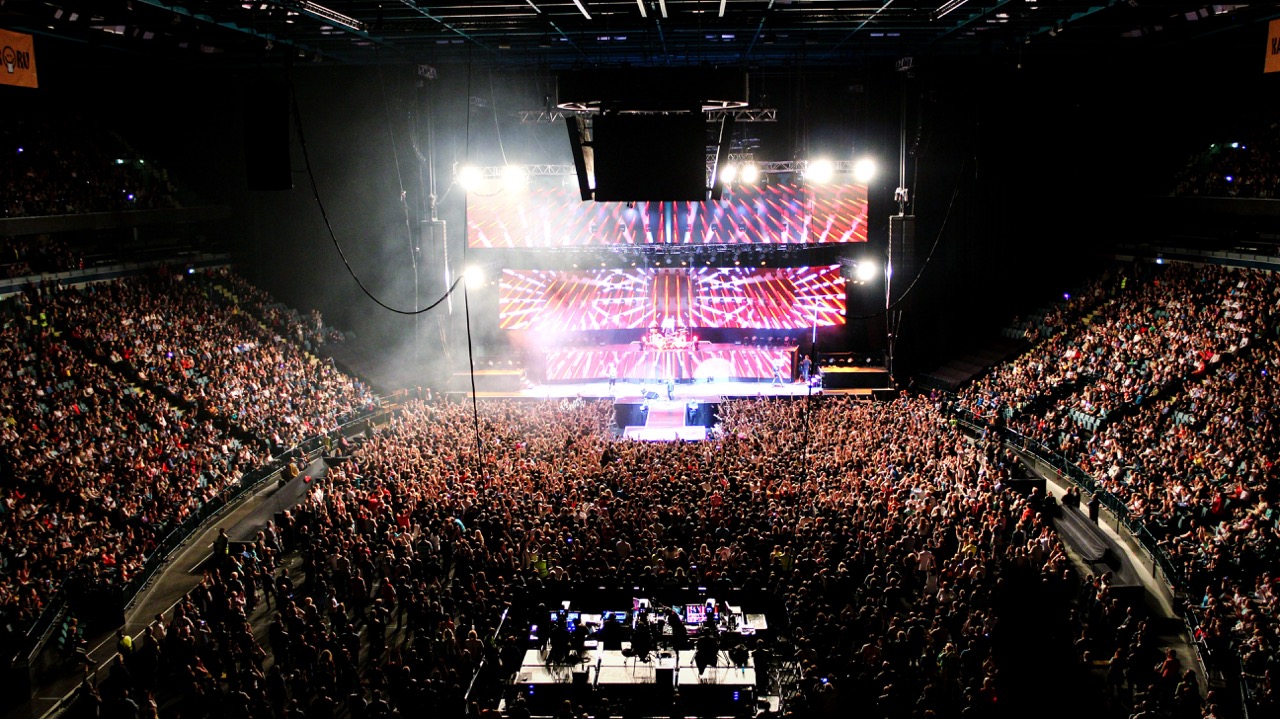 Guides
Stadium Wi-Fi capacity planning: sizing for a packed house
A sold-out crowd is the most hostile RF environment your wireless will ever face. Here is how to size Cisco Wi-Fi for a packed house, from device density math to antenna geometry to controller headroom.
June 6, 2026 · 12 min read Guides
Cisco Wi-Fi 6E access points: the lineup
A practical, model-by-model guide to Cisco's Wi-Fi 6E access point lineup, what the 6 GHz band actually buys you, and how to choose the right radio for federal, healthcare, and enterprise sites.
May 5, 2026 · 11 min read Guides
AP density and counts: Wi-Fi 6 vs Wi-Fi 7
Wi-Fi 7 changes the math on how many access points a high-density space actually needs. Here is how AP counts shift between Wi-Fi 6 and Wi-Fi 7, why the answer is rarely "fewer APs," and how to size a Cisco Catalyst deployment that holds up under real load.
April 19, 2026 · 12 min read