
Cisco XDR Pricing and Licensing Explained: Tiers, Costs, and What Drives the Quote
Cisco XDR pricing has no public list price. Here is how the three tiers, telemetry volume, retention, and Enterprise Agreement bundling drive your quote, and how to size it before you ask.
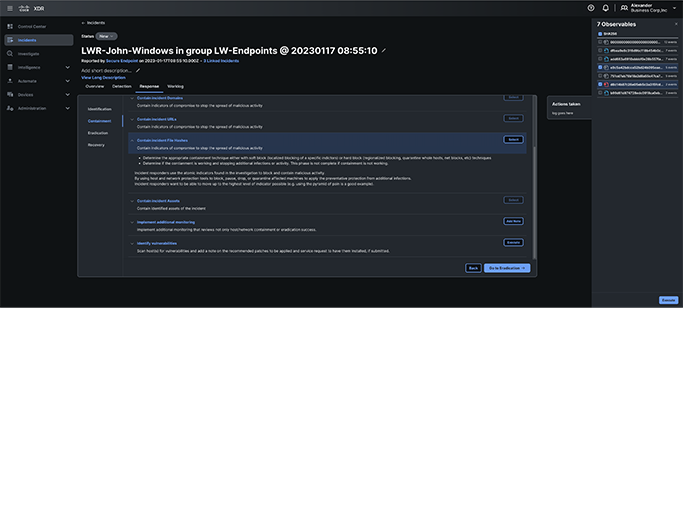
If you have started pricing a security platform refresh, you have probably noticed the obvious: Cisco does not publish a plain-English price list for Cisco XDR. There is no public per-user dollar figure, no shopping-cart total, and no calculator that spits out a number. That is not an oversight. XDR is a tiered, subscription-licensed SaaS platform whose cost depends on how many people you protect, how much telemetry you ingest, how long you retain it, which integrations you need, and how you buy. The quote is assembled, not looked up.
This guide breaks down what actually drives a Cisco XDR quote so you can size your own deployment before you ever talk to a rep. We walk through the three license tiers (Essentials, Advantage, and Premier), the telemetry and retention levers that move the number, how XDR folds into a Cisco Enterprise Agreement, and what changes when you are a federal, DoD, SLED, or healthcare buyer. For the full product picture, see our Cisco XDR platform overview; when you are ready for a real number, our team turns these inputs into a procurement-ready Cisco quote.
Why there is no public Cisco XDR price: Cisco XDR is sold as a per-user subscription with usage-based ingestion and multiple retention and integration options, so a single advertised price would be meaningless. Anyone quoting you a flat dollar list price for XDR is guessing. The honest answer is that cost is a function of tier, user count, telemetry volume, retention term, and contract structure, and those are exactly the variables this guide explains.
How Cisco XDR licensing actually works
Cisco XDR is licensed as a cloud-native SaaS subscription, billed per user rather than per device or per endpoint. That is an important distinction. Many security tools count agents or seats on protected machines; XDR counts the human users in your environment and bundles a telemetry allotment to each one. The platform is hosted and operated by Cisco, so there is no on-prem console, no appliance to rack, and no separate maintenance contract for the management plane. You are buying an outcome-focused service, and the line items on your quote reflect that service model.
Three things determine the base of any XDR quote: which of the three tiers you select, how many users you license, and the subscription term (one, three, or five years, with longer terms typically improving the effective rate). On top of that base sit usage and option drivers: data ingestion volume, retention period, and the specific third-party integrations you turn on. Get the tier and user count right and you have roughly two-thirds of the quote; the remaining third is the telemetry and retention math we cover below.
The three Cisco XDR tiers: Essentials, Advantage, and Premier
Cisco XDR ships in three nested tiers. Each higher tier includes everything below it and adds capability, so the right starting question is not which features you want but how much of the response and forensics workflow you want to own versus hand to Cisco. Choosing the tier is the single biggest cost driver, so it is worth understanding exactly where the lines fall before you compare any Cisco XDR cost breakdown.
Cisco XDR Essentials
Essentials is not a stripped-down trial tier. It delivers the full core XDR feature set: the analytics and correlation engine that rolls events into a single incident, risk-based incident prioritization on the 1 to 1000 scale, built-in Cisco Talos threat intelligence, asset and user context, threat hunting through the Investigate feature, custom automation workflows, and the Attack Storyboard with Instant Attack Verification, where agentic AI autonomously confirms whether an alert is a real attack and assembles the timeline. Essentials covers built-in integrations across the Cisco Security portfolio plus third-party threat-intelligence and ITSM connectors. For a Cisco-heavy shop that wants prioritized, correlated incidents without managing a separate console, Essentials is frequently the right and most economical landing spot.
Cisco XDR Advantage
Advantage is the tier most enterprises with a mixed-vendor stack end up on. It includes everything in Essentials and adds two things that matter for cost and capability. First, commercially supported, Cisco-curated integrations with select third-party tools, specifically EDR, email threat defense, NGFW, NDR, and SIEM, so you can respond regardless of which vendor sits on the endpoint or perimeter. Second, XDR Forensics, which collects more than 350 endpoint artifacts and adds a remote interactive response capability for containment and eradication. If you run CrowdStrike, SentinelOne, Microsoft Defender, Palo Alto, Splunk, or Proofpoint and want XDR to correlate and act across those tools rather than just watch Cisco sources, Advantage is the tier that adds it.
Cisco XDR Premier
Premier delivers the full Advantage feature set as a Cisco-managed detection and response service, an MXDR. Cisco security experts run around-the-clock monitoring, perform security validation through penetration testing, and include select Cisco Talos Incident Response retainer services. You are no longer just licensing software; you are buying a managed SOC outcome operated by Cisco. Premier is how organizations without a 24x7 security operations team, including lean public-sector and healthcare shops, get professional SOC coverage. Because it bundles human expertise and a retainer, Premier carries the highest per-user cost of the three tiers, and that premium is the labor you are not hiring.
Cisco XDR Essentials vs Advantage: which tier do you actually need
The Essentials vs Advantage decision usually comes down to one question: do you need to ingest, correlate, and respond across non-Cisco security tools? If your detection and response lives entirely inside Cisco Secure Endpoint, Secure Firewall, Umbrella, Email Threat Defense, and ISE, Essentials gives you the complete analytics, prioritization, Talos intelligence, and Instant Attack Verification workflow without paying for capabilities you will not use. The moment a third-party EDR, NGFW, NDR, SIEM, or email security tool needs to be a first-class, supported source of detection and response, you are in Advantage territory.
The second deciding factor is forensics. XDR Forensics, with its 350-plus artifact collection and remote interactive response, lives in Advantage and Premier only. If your incident response process depends on deep endpoint artifact collection and remote containment, that requirement alone justifies Advantage. A practical sizing tip: many teams start on Essentials to validate the platform against their Cisco telemetry, then move to Advantage as they bring third-party sources and forensics into scope. Because the tiers are nested, that is an expansion, not a migration.
- Choose Essentials if your stack is predominantly Cisco Security and you want full correlation, prioritization, and Instant Attack Verification without third-party response.
- Choose Advantage if you need supported third-party EDR, email, NGFW, NDR, or SIEM integrations and XDR Forensics with remote response.
- Choose Premier if you lack a 24x7 SOC and want Cisco to run detection and response, penetration-test validation, and a Talos IR retainer for you.
What drives a Cisco XDR quote beyond the tier
Once the tier and user count are set, three usage and option levers move the final number. Understanding them is the difference between a quote that fits and a renewal surprise. These are the variables our team scopes with you when building a Cisco XDR subscription package.
Data ingestion volume
XDR includes a default ingestion allotment of 2 GB per user per month. For most environments dominated by Cisco telemetry across the six native sources (endpoint, network, firewall, email, identity, and DNS), that default is comfortable. But ingestion adds up fast when you pull in verbose third-party SIEM data, high-volume firewall logs, or extensive cloud flow logs from AWS, Azure, and Google Cloud. If your sources are chatty, you will buy add-on gigabytes, and that volume becomes a recurring part of the subscription. Estimating ingestion honestly up front, rather than discovering it at renewal, is the single most common place XDR quotes drift.
Data retention term
XDR retains data for 90 days by default, with 180-day and 365-day options available. Retention is a real cost lever and often a compliance requirement. Regulated buyers in healthcare and the public sector frequently need 365-day retention to satisfy audit and incident-investigation mandates, while a commercial enterprise may be content with 90. Longer retention raises the subscription cost, so match the term to your actual regulatory obligation rather than defaulting to the longest available window.
Third-party integrations and forensics
At Advantage, the curated third-party integrations (EDR, email, NGFW, NDR, SIEM) and XDR Forensics are part of what you are paying for. The integration list is broad, covering CrowdStrike Falcon, SentinelOne, Microsoft Defender, Palo Alto Cortex, Splunk, Proofpoint, Fortinet, Check Point, ServiceNow, and backup partners like Cohesity, Rubrik, and Veeam for Automated Ransomware Recovery. The more of your existing stack you bring into XDR for cross-vendor correlation, the more value you extract from the Advantage tier, which is exactly the point: XDR is designed to protect the security investments you already own rather than replace them. You can see how these pieces fit the broader portfolio on our Cisco security solutions page.
Buying Cisco XDR through an Enterprise Agreement
XDR rarely gets bought in isolation. Many organizations license it inside a Cisco Enterprise Agreement (EA) alongside Secure Endpoint, Secure Firewall, Umbrella, Duo, and ISE. An EA bundles multiple Cisco security products under a single agreement and term, which can simplify true-forward growth, align renewal dates, and improve the effective per-user economics versus licensing each product on its own island. If you are already standardizing on Cisco Security, folding XDR into the EA is often the cleaner path, both administratively and on price.
That said, an EA is not automatically the cheapest route for every buyer. If XDR is your only Cisco security subscription, a standalone tier subscription may be simpler and avoid committing to spend you will not use. The right structure depends on how much of the Cisco Security portfolio you run and how you want renewals to line up. This is precisely the kind of trade-off an authorized partner helps you model before you commit, rather than after.
Cisco XDR pricing for federal, DoD, SLED, and healthcare buyers
Public-sector and regulated buyers have extra variables that shape both the SKU and the price. Cisco XDR is a cloud-delivered SOC platform whose value props line up with federal priorities: native MITRE ATT&CK mapping supports threat-informed defense, and its identity, endpoint, network, and DNS correlation maps to the pillars of the CISA Zero Trust Maturity Model. XDR also supports US Government Community Cloud (GCC) integrations, including Microsoft Defender for Office 365 GCC and Microsoft Defender for Endpoint GCC, which matters if your agency runs on Microsoft government clouds.
Authorization status is the part you must verify rather than assume. Cisco XDR relies on Cisco Security Cloud Control for identity data, and several adjacent Cisco cloud services have achieved or are pursuing FedRAMP authorization. Do not assume a specific XDR FedRAMP level, DoDIN APL listing, or impact level without confirming current status on the FedRAMP Marketplace at the time of purchase. For Trade Agreements Act (TAA) compliance and Government Purchase Card (GPC) procurement, an authorized partner scopes the compliant SKU, the right retention tier, and accurate ingestion sizing, then maps it to your contract vehicle. Our federal procurement and compliance team handles exactly that and can confirm your contract-vehicle eligibility before you commit any budget.
What to have ready before you request an XDR quote: Bring your total user count, your current security stack (which EDR, firewall, email, SIEM, and identity tools you run), an estimate of monthly telemetry volume, your required retention period, and your preferred term length. For public-sector buyers, add your contract vehicle and any TAA, GPC, or impact-level requirements. With those inputs we can size a tier and produce a realistic, defensible number quickly.
How Cisco XDR compares on value, not just price
Price only means something next to capability, and XDR's value case rests on being telemetry-centric and vendor-neutral. Against Microsoft Defender XDR, which is strongest inside the Microsoft 365 and Entra estate, Cisco XDR leads with built-in network detection and an open-integration model that correlates third-party EDR, SIEM, and firewall telemetry rather than favoring one ecosystem. Against Palo Alto Cortex XDR, which is endpoint and agent-centric, Cisco XDR spans six native telemetry sources including network and DNS and can ingest Cortex itself as a third-party source.
Against a traditional SIEM like Splunk Enterprise Security (now a Cisco company), the contrast is log-centric versus telemetry-centric: a SIEM often measures outcomes in days, while XDR ships prebuilt correlation and response in minutes and integrates Splunk as a data source rather than replacing the analyst workflow. And against standalone EDR, which sees only the endpoint, XDR extends detection across network, firewall, email, identity, and DNS so multi-stage attacks that never touch a monitored endpoint are still caught. When you weigh the subscription against the analyst hours saved by Instant Attack Verification and the tools you keep instead of rip-and-replace, the per-user cost reads very differently.
Next step: turn these drivers into a real number
There is no shortcut to a public Cisco XDR price because the number genuinely depends on your tier, user count, telemetry volume, retention, and how you buy. The good news is that every one of those drivers is knowable in advance, and now you know what to measure. Start with the tier logic (Essentials for Cisco-native, Advantage for mixed-vendor and forensics, Premier for managed), size your ingestion and retention honestly, and decide whether an Enterprise Agreement fits your broader Cisco footprint.
When you are ready, read the full Cisco XDR platform overview to confirm the tier capabilities match your use case, then send us your inputs so we can size a tier and produce a defensible number. As an authorized Cisco partner, Uniqcli scopes the compliant SKU, ingestion, and retention, structures it to your purchasing path, and returns a procurement-ready price with no flat-list guesswork required.
Frequently asked questions
How much does Cisco XDR cost?
Cisco does not publish a flat list price for XDR. Cost is driven by the tier you choose (Essentials, Advantage, or Premier), your total user count, your subscription term, monthly telemetry ingestion volume, and data retention period. As an authorized Cisco partner, Uniqcli sizes these inputs and returns a procurement-ready quote rather than a guessed number.
What is the difference between Cisco XDR Essentials and Advantage?
Essentials delivers the full core XDR feature set, including analytics, correlation, Talos threat intelligence, 1 to 1000 prioritization, and Instant Attack Verification across Cisco Security sources. Advantage adds commercially supported, Cisco-curated third-party integrations (EDR, email, NGFW, NDR, SIEM) and XDR Forensics with 350-plus artifact collection and remote response. Choose Advantage if you need supported response across non-Cisco tools.
Is Cisco XDR licensed per user or per device?
Cisco XDR is licensed as a per-user subscription, not per device or per endpoint. Each user includes a default telemetry allotment of 2 GB per month. Additional ingestion, longer retention (180 or 365 days versus the 90-day default), and the Advantage or Premier tiers add to the per-user base cost.
Does Cisco XDR have a FedRAMP authorization?
You should verify FedRAMP authorization status per component on the FedRAMP Marketplace at the time of purchase. Cisco XDR relies on Cisco Security Cloud Control for identity data, and several adjacent Cisco cloud services have achieved or are pursuing FedRAMP authorization. Do not assume a specific XDR FedRAMP level, DoDIN APL listing, or impact level without confirming current status.
Can I buy Cisco XDR with a Government Purchase Card or through a contract vehicle?
Yes. As an authorized Cisco partner, Uniqcli supports TAA-compliant, GPC-eligible procurement via Simplified Acquisition and FAR-based purchase orders (our GSA MAS application is in progress). We scope the compliant SKU, retention tier, and ingestion sizing for your public-sector requirements.
Should I buy Cisco XDR through a Cisco Enterprise Agreement?
It depends on how much of the Cisco Security portfolio you run. Bundling XDR into an Enterprise Agreement alongside Secure Endpoint, Secure Firewall, Umbrella, Duo, and ISE can align renewals and improve effective per-user economics. If XDR is your only Cisco security subscription, a standalone tier subscription may be simpler. We help model both before you commit.
Uniqcli Team
The Uniqcli Team is an authorized Cisco partner specializing in Catalyst wireless, switching, datacenter fabric, licensing, and managed services for U.S. federal, state, local, and education customers. We scope Cisco bills of materials, validate procurement paths (TAA, FIPS, contract vehicles), and deliver design, deployment, and managed operations.
Ready to scope your Cisco build?
Build a quoteRelated reading
View all → Guides
Cisco Licensing Cost Explained: Essentials vs Advantage vs Premier
Cisco hardware sticker prices are only the opening number. Here is how Essentials, Advantage, and Premier licensing tiers, subscription terms, and SmartNet quietly decide what you actually pay.
March 26, 2026 · 9 min read Guides
Cisco ISE Licensing Explained: Essentials, Advantage, and Premier Tiers Demystified
A plain-English guide to Cisco ISE license tiers: what Essentials, Advantage, and Premier each add, how endpoint-count subscriptions and the separate Device Administration license work, and the cost drivers behind your quote.
June 11, 2026 · 11 min read Guides
Cisco wireless licensing for Wi-Fi 7 explained
Wi-Fi 7 access points are the easy part. The licensing model behind them, from the Catalyst 9800 controller to per-AP subscriptions and Smart Account hygiene, is where budgets and deployments actually get decided. Here is how Cisco wireless licensing really works for a Wi-Fi 7 refresh, and how to size it before you buy.
May 15, 2026 · 10 min read Guides
How Much Does Cisco Catalyst Center (DNA) Licensing Cost?
Catalyst Center (formerly Cisco DNA) licensing starts from roughly $25 to $150 per device, per year, but tier, subscription term, controller appliance, and SmartNet make the real number very different. Here is how the cost actually builds.
March 10, 2026 · 9 min read Guides
How Much Does a Cisco Catalyst 9300 Cost?
A new Catalyst 9300 starts around $5,000 at list for a small data-only model, but the switch on the shipping label is rarely the number you actually pay. Licensing tier, subscription term, SmartNet, optics, PoE, and install are what move the real total, and only a quote tells you the truth.
February 11, 2026 · 9 min read Guides
Cisco ISE Essentials vs Advantage vs Premier: License Tiers Explained
Cisco ISE Essentials vs Advantage license tiers, and where Premier fits above them, explained at the feature level, plus how endpoint count, term length, and legacy Base/Plus/Apex naming factor in.
July 11, 2026 · 5 min read