
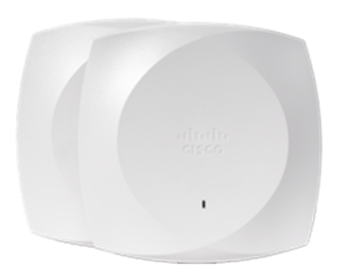
Cisco and Ruckus (now part of CommScope) rarely lose to each other on raw radio performance, both build competent, modern access points. The real split is scope and ecosystem. Cisco fields a full-stack enterprise portfolio (switching, security, identity, SD-WAN, and two wireless architectures) that most large organizations end up standardizing on regardless of vertical. Ruckus built its reputation on adaptive-antenna RF engineering for punishing, high-interference environments, stadiums, hotels, transit hubs, large public venues, and controller flexibility that undercuts Cisco on deployment simplicity for small and mid-size sites. Both are legitimate shortlist candidates in the right context; the mistake is evaluating either one outside the context it was actually built for.
If you're buying wireless as one piece of a broader Cisco-standardized network, Cisco is the default and the ecosystem argument alone usually settles it. If you're solving a specific high-density or hospitality RF problem and evaluating vendors on that problem alone, Ruckus deserves a serious look.
At a glance
| Factor | Cisco (Catalyst / Meraki) | Ruckus (CommScope) |
|---|---|---|
| Deployment modes | Catalyst on-prem/Catalyst Center or Meraki cloud, two distinct architectures | Ruckus One (cloud), SmartZone (on-prem controller), or Unleashed (controller-less) |
| RF heritage | Broad, consistent performance across the full enterprise portfolio | Adaptive-antenna engineering purpose-built for high-density, high-interference RF |
| Strongest verticals | General enterprise, campus, government, healthcare, distributed retail | Hospitality, stadiums/venues, higher ed, transit, E-Rate K-12 |
| NAC / identity | Cisco ISE, deep native integration | Pairs with Ruckus's own tools or third-party NAC |
| Security ecosystem breadth | Very broad, Umbrella, XDR, ISE, extensive partner certifications | Narrower, more focused ecosystem |
| Support model | Cisco TAC-backed, formal SLAs, large partner/reseller base | CommScope/Ruckus TAC-backed, formal SLAs |
Management model: two Cisco architectures vs. three Ruckus modes
Cisco splits wireless management into two distinct product lines: Catalyst, managed on-premises through a wireless LAN controller or centrally through Catalyst Center, and Meraki, managed entirely through its cloud dashboard. You pick one architecture per deployment and largely stay in it, though Cisco's newer CW-series hardware is starting to blur that line at the family level. Browse both lines in our Cisco wireless catalog.
Ruckus offers three modes under one hardware family: Ruckus One for pure cloud management, SmartZone for a traditional on-premises controller, and Unleashed, which turns one access point into a controller for the rest of the fleet with no separate controller hardware at all. That third mode is genuinely useful for a single mid-size site, a hotel, a school, a branch office, that wants controller-grade features without buying or licensing a controller.
RF and deployment posture: where Ruckus built its name
Ruckus's core engineering story is adaptive-antenna technology that shapes RF signal path per client rather than broadcasting a fixed pattern, aimed specifically at dense, interference-heavy environments where standard omnidirectional antennas struggle. That heritage shows up in where Ruckus wins deals: packed stadiums, hotels with hundreds of concurrent guest devices and thick construction, transit stations, and large public venues where RF conditions are the hard problem, not just device count. Hospitality in particular has been a durable Ruckus stronghold, partly on RF merit and partly because the platform's guest-network and property-management-system integration heritage was built with hotels specifically in mind.
Cisco's family-level positioning is different: Catalyst and Meraki access points are engineered for consistent, predictable performance across the entire range of enterprise environments, offices, campuses, warehouses, and high-density spaces alike, rather than optimizing hardest for the extreme end of RF difficulty. For a typical enterprise campus, that breadth is the more valuable trait than a specialized advantage in a venue-class deployment. We won't quote spatial-stream counts or throughput figures here since exact positioning varies by specific model and firmware release, confirm current specs for your shortlist with a validated quote before sizing a design. If your environment genuinely resembles a stadium bowl or a packed hotel more than an office campus, weight the RF conversation accordingly rather than defaulting to whichever vendor your switching already runs.
Ecosystem and identity: Cisco's breadth is hard to match
This is Cisco's strongest argument in a head-to-head. Wireless rarely gets bought in isolation at enterprise scale, it needs to talk to switching, identity, DNS-layer security, and increasingly extended detection and response tooling. Cisco Identity Services Engine (ISE) integrates natively with Catalyst and Meraki, and the surrounding Cisco security portfolio (Umbrella, XDR) extends that reach further than most competitors attempt to match. Ruckus pairs with its own management tooling or third-party NAC platforms, which works well but doesn't carry the same single-vendor ecosystem depth. For a buyer evaluating wireless as one line item among many, that breadth reduces the number of vendors and contracts to manage; for a buyer solving one specific venue's RF problem, it's a secondary consideration behind whether the access point actually performs in that room.
Procurement and reseller channel
Availability and lead time are part of this decision, not an afterthought. Cisco's partner and reseller network is large and deep, which generally means more configuration options, more competitive quoting, and more paths to source hardware quickly, including remanufactured and TAA-compliant variants for government buyers. Ruckus, under CommScope, sells through a smaller but still established reseller channel with its own strengths in the hospitality and venue verticals where it's most entrenched.
For a buyer without an existing relationship, that difference in channel depth can matter as much as any spec sheet, a wider partner network generally means more options for financing, staging, and post-sale support outside the vendor's own direct organization. Confirm current lead times for your specific models with your reseller before committing to a hard install date on either platform, particularly for a venue opening on a fixed calendar date where a hardware delay isn't an option.
Which should you choose?
- Already standardized on Cisco switching, identity, or security: Cisco wireless is the path of least resistance and the deepest integration.
- Hospitality property, stadium, or high-density public venue with genuinely difficult RF conditions: Ruckus's adaptive-antenna heritage is built for exactly this problem.
- Single mid-size site that wants controller-grade features without controller hardware or licensing: Ruckus Unleashed is a legitimate shortcut.
- Regulated or government buyer that needs the deepest NAC/identity integration on one contract: Cisco ISE plus Catalyst or Meraki is the more defensible stack.
- Distributed multi-site retail or branch network wanting zero on-prem infrastructure: Meraki's cloud-only model or Ruckus One both compete here, compare licensing terms directly.
Frequently asked questions
Is Ruckus wireless actually better than Cisco for high-density venues?
In venues where RF interference is the central problem, stadiums, hotels, transit hubs, Ruckus's adaptive-antenna heritage is a genuine, purpose-built strength. For general enterprise campus deployments, Cisco's Catalyst and Meraki portfolios perform well across the same range of density without that specialization, and the broader ecosystem often outweighs a venue-specific RF advantage.
What is Ruckus Unleashed and when does it make sense?
Unleashed turns one Ruckus access point into a controller for the rest of the fleet, so a site gets controller-grade features (roaming, unified policy, centralized visibility) without buying or licensing separate controller hardware. It's a strong fit for a single mid-size site, like a hotel, school, or branch office, that doesn't need multi-site centralized management.
Does Ruckus integrate with Cisco ISE for network access control?
Ruckus is not built around Cisco ISE the way Catalyst and Meraki are, though multi-vendor NAC integration is common in mixed environments. If ISE (or a deep Cisco identity/security integration) is a hard requirement, Cisco wireless is the more direct fit; confirm current integration specifics for your exact environment before committing to a mixed-vendor design.
Which is more cost-effective, Cisco or Ruckus?
It depends heavily on deployment mode and device count rather than list price alone. Ruckus Unleashed can avoid controller cost entirely for a single site, while Cisco's ecosystem breadth can reduce total integration cost for organizations already running Cisco switching and security. Get a validated quote against your actual site count and requirements rather than assuming either vendor wins on price by default.
Can Cisco and Ruckus access points run on the same network?
They can coexist on the same physical LAN, VLANs, and subnets, but each vendor's access points are managed through their own controller or cloud platform with no shared dashboard. A mixed fleet is workable during a phased migration but isn't a long-term management strategy.
Which vendor has the stronger support organization?
Both offer formal, TAC-backed support with defined SLAs. Cisco's support organization and partner/reseller network are larger in absolute scale, which matters for organizations juggling many vendors on one contract. Ruckus (CommScope) support is well-regarded within its core verticals, particularly hospitality and venue deployments.
Uniqcli Team
The Uniqcli Team is an authorized Cisco partner specializing in Catalyst wireless, switching, datacenter fabric, licensing, and managed services for U.S. federal, state, local, and education customers. We scope Cisco bills of materials, validate procurement paths (TAA, FIPS, contract vehicles), and deliver design, deployment, and managed operations.
Ready to scope your Cisco build?
Build a quoteRelated reading
View all → Guides
VeloCloud vs Cisco SD-WAN: Enterprise WAN Compared
VeloCloud vs Cisco SD-WAN: both are mature enterprise WAN fabrics, but ownership model, channel, and Broadcom-era VeloCloud licensing changes matter more than the spec sheet here.
July 11, 2026 · 7 min read Guides
CBRS and private 5G explained for enterprises
CBRS opened up private cellular for ordinary enterprises. Here is how the shared 3.5 GHz band, private 5G, and Wi-Fi 7 actually fit together, and where each one earns its keep on a real network.
June 6, 2026 · 11 min read Guides
Wi-Fi generations explained: from Wi-Fi 5 to Wi-Fi 7
From Wi-Fi 5 to Wi-Fi 6, 6E, and now Wi-Fi 7, each generation changed what a wireless network can carry. Here is what actually changed under the hood, why the 6 GHz band matters, and how to map the standards to real Cisco hardware before you spec a refresh.
June 5, 2026 · 10 min read Guides
Wi-Fi 7 vs Wi-Fi 6E: what actually changes for enterprise networks
Wi-Fi 7 and Wi-Fi 6E both lean on the 6 GHz band, but the differences that matter to an enterprise are the ones nobody puts on a spec sheet: client mix, switch uplinks, controller versions, and whether your building can actually use 320 MHz channels. Here is what changes, what does not, and how to size a Cisco refresh that earns its budget.
May 20, 2026 · 11 min read Guides
Cisco wireless licensing for Wi-Fi 7 explained
Wi-Fi 7 access points are the easy part. The licensing model behind them, from the Catalyst 9800 controller to per-AP subscriptions and Smart Account hygiene, is where budgets and deployments actually get decided. Here is how Cisco wireless licensing really works for a Wi-Fi 7 refresh, and how to size it before you buy.
May 15, 2026 · 10 min read Guides
320 MHz channels: how Wi-Fi 7 doubles channel width
Wi-Fi 7 widens the maximum channel from 160 MHz to 320 MHz. Here is the physics behind the jump, why it lives only in 6 GHz, the spectrum math that limits how many wide channels you really get, and how to design a Cisco wireless network that can use them.
March 9, 2026 · 11 min read