
Cisco ISE Overview: What the Identity Services Engine Does and Where It Fits
This Cisco ISE overview explains the Identity Services Engine in plain English: the RADIUS and TACACS+ policy engine behind network access control, its capabilities and license tiers, and exactly where it fits in a zero-trust design.
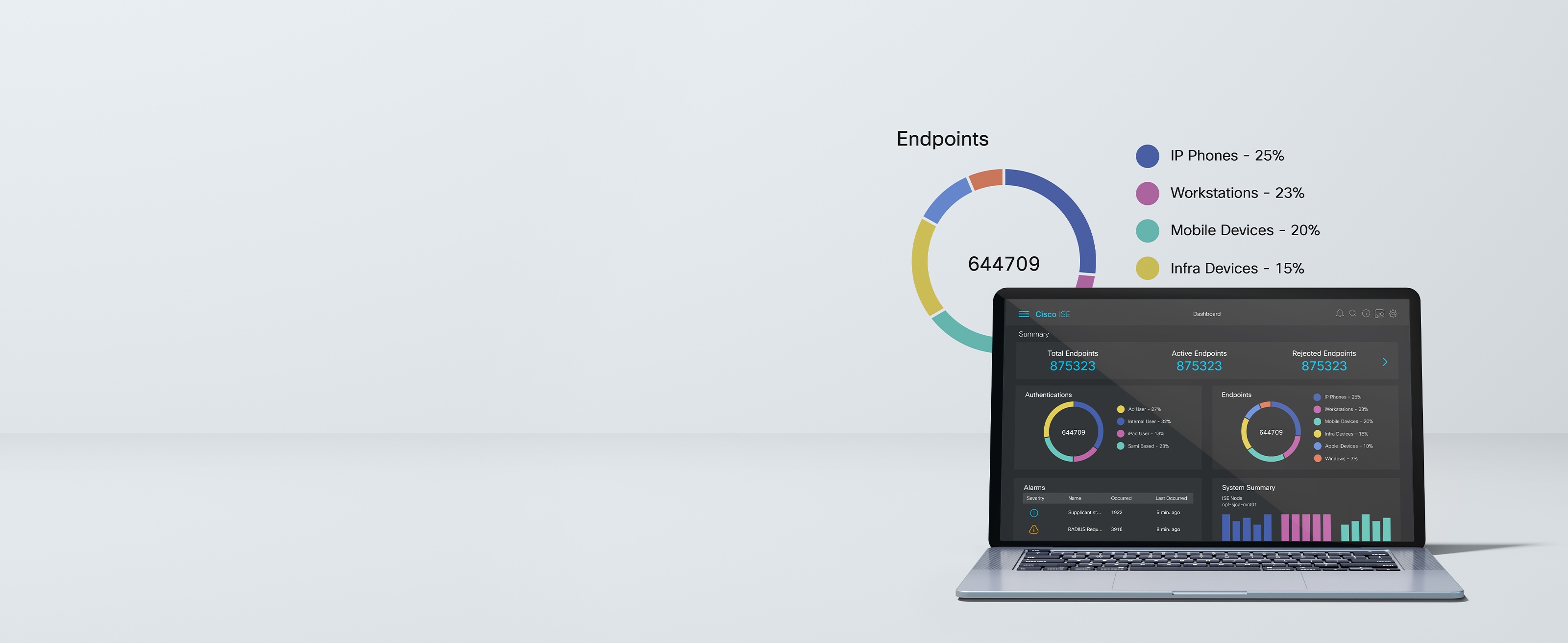
If you have spent any time around enterprise networking, you have heard the name Cisco Identity Services Engine, usually shortened to ISE. It shows up in zero-trust architecture diagrams, in audit findings, in segmentation projects, and in nearly every conversation about controlling who and what is allowed on a corporate network. Yet for all the times it gets referenced, ISE is rarely explained plainly. People know it does something with 802.1X and identity, but the boundaries of what it actually is, and where it stops, often stay fuzzy.
This overview fixes that. We will define what Cisco ISE is, explain the policy engine at its core, walk through its main capabilities and license tiers, and place it precisely in a larger security and access design. The goal is a clear mental model you can carry into a planning conversation, not a step-by-step rollout guide. If you want the operational detail, our Cisco ISE product page and the deeper build content link out from here.
What is Cisco ISE, in one sentence
Cisco Identity Services Engine is a centralized network access control and identity policy platform that authenticates and authorizes every user and device before granting network access, then continuously enforces policy based on identity, posture, and context. In other words, ISE is the gatekeeper that sits between an endpoint and the network it wants to join. When a laptop, phone, printer, badge reader, or infusion pump connects to a switch port or wireless SSID, ISE is the system that decides whether it gets on at all, and if so, with what level of access.
The problem ISE was built to solve is the unmanaged, unauthenticated, and non-compliant endpoint. Without an access-control layer, plugging into an Ethernet jack or joining Wi-Fi is effectively an open invitation. ISE replaces that implicit trust with an explicit policy decision: identify the endpoint, confirm who or what it is, check whether it meets your security bar, and then authorize the appropriate access. Cisco positions ISE as the bedrock for zero trust at the network layer, which is exactly the role it plays in most modern designs.
The policy engine: RADIUS and TACACS+ at the core
Strip ISE down to its essence and you find two authentication, authorization, and accounting (AAA) protocols doing the heavy lifting. The first is RADIUS, which ISE serves as a full AAA server. When a switch or wireless controller receives a connection, it forwards the request to ISE over RADIUS, and ISE answers with an accept or reject plus instructions such as a VLAN assignment or a downloadable access control list. This is the engine behind 802.1X, the IEEE standard for port-based network access control, and it is why ISE is so often described simply as a Cisco ISE RADIUS server. ISE supports the full range of EAP methods, including PAP, MS-CHAP, EAP-MD5, EAP-TLS, EAP-TTLS, PEAP, TEAP, and EAP-FAST, and it can validate both machine and user credentials in a single session through EAP chaining.
The second protocol is TACACS+, which serves a different purpose. Where RADIUS governs endpoints joining the network, TACACS+ governs administrators logging into network devices. With TACACS+, ISE provides command-level control and auditing of who can run which commands on your switches, routers, and firewalls, granting access by credentials, group, location, and command, and keeping a full audit trail of every configuration change. This device-administration function is licensed separately from the endpoint tiers, a distinction worth remembering at quote time.
RADIUS vs TACACS+ in ISE, quickly: RADIUS authenticates and authorizes devices and users joining the network (the 802.1X path). TACACS+ authenticates and authorizes administrators managing the network gear itself, with per-command authorization and auditing. ISE runs both, but the TACACS+ Device Administration license is a separate, perpetual line item, applied to Policy Service nodes running the device-administration persona.
For endpoints that genuinely cannot run an 802.1X supplicant, such as older IP cameras or industrial sensors, ISE falls back to MAC Authentication Bypass (MAB), profiling the device by its hardware address and other attributes rather than rejecting it outright. That flexibility is what lets ISE cover a mixed estate of managed laptops, BYOD phones, and headless IoT gear without forcing every device into the same authentication model. It also covers wired, wireless, VPN, and 5G connections from the same policy set, so the rule you write once applies no matter how a device shows up.
What ISE actually does: the core capabilities
Authentication is only the entry point. The reason ISE is a platform rather than a feature is the stack of capabilities layered on top of the AAA engine. Together these are the Cisco ISE features that turn a yes-or-no access decision into a rich, context-aware policy, and they are what separate true network access control from a bare login prompt.
Endpoint profiling and classification
ISE automatically discovers and classifies every endpoint that touches the network, using predefined and custom device templates plus a cloud-based Multi-Factor Classification machine-learning engine that fingerprints unknown IoT, medical, and OT devices by manufacturer, model, operating system, and endpoint type. This matters because you cannot write sensible policy for devices you cannot see. Profiling builds the inventory that everything else depends on, storing a detailed attribute history for each endpoint, and it is why ISE is so heavily used for unmanaged-device visibility in healthcare and manufacturing.
Posture and compliance
Beyond identity, ISE can check the health of an endpoint before letting it on: operating-system patch level, antivirus and antimalware status, disk encryption, registry settings, USB media, and jailbreak or root status. These posture checks run through the Cisco Secure Client (formerly AnyConnect) in full, temporal, or agentless modes, and ISE can integrate with MDM and EMM platforms such as Microsoft Intune and Jamf to query device compliance. A device that fails posture can be quarantined or sent to an automatic remediation flow rather than admitted to production.
Segmentation with TrustSec and Security Group Tags
One of ISE's most distinctive capabilities is software-defined segmentation. Instead of writing access rules around IP addresses, ISE assigns Security Group Tags (SGTs) to users and devices and defines policy by business role. Acting as the segmentation controller, ISE propagates those tags across switches, routers, wireless, and firewalls, so a guest tag and a clinical-device tag stay isolated from each other no matter where they physically connect. This micro- and macro-segmentation is the mechanism that limits lateral movement when something does get compromised, and it also drives Cisco Software-Defined Access policy through Catalyst Center.
Guest access, BYOD, and threat containment
ISE also runs the unglamorous but high-value workflows that keep help-desk tickets down: branded hotspot, sponsored, and self-service guest portals, plus self-service BYOD onboarding with automated supplicant provisioning and certificate enrollment, including SAML 2.0 for external identity providers. And because ISE shares context with the rest of the security stack through pxGrid, it can act on threats. Rapid Threat Containment and Adaptive Network Control let ISE quarantine, bounce, or shut down a compromised or vulnerable endpoint's access automatically, while Threat-Centric NAC changes access based on CVSS and threat scores from tools like Tenable.
Certificates and identity-store integration
Under all of this sits a built-in certificate authority with OCSP-based revocation, so teams can issue and manage the certificates that EAP-TLS and BYOD onboarding depend on without standing up a separate PKI. ISE then connects to the identity stores you already run: Microsoft Active Directory (multiforest, on-premises or Entra ID), LDAP, RADIUS token servers, RSA one-time-password systems, ODBC databases, and SAML identity providers. That breadth is what lets one ISE policy speak to every directory in a mixed enterprise.
ISE editions: Essentials, Advantage, and Premier
ISE is licensed as an endpoint-count-based subscription across three nested tiers, meaning each higher tier includes everything below it. Understanding the split helps you scope the right deployment without overbuying, and it maps cleanly onto the capabilities described above.
- ISE Essentials: the entry tier covering core NAC. This is your 802.1X and RADIUS authentication, base AAA, guest access (hotspot, self-registration, and sponsored), and base visibility. It replaced the pre-3.0 Base license.
- ISE Advantage: adds the context-rich features most enterprises actually want, including endpoint profiling enforcement, AI endpoint analytics, TrustSec and SGT segmentation, BYOD, broad Cisco and third-party ecosystem integration through pxGrid, and Rapid Threat Containment. It includes all Essentials features and replaced the old Plus tier.
- ISE Premier: the top tier, adding posture visibility and enforcement, MDM and EMM integration with Jamf and Microsoft Intune, and Threat-Centric NAC that adjusts access automatically based on CVSS vulnerability scores. It includes everything in Advantage and Essentials and replaced the Apex tier.
- Device Administration license: a separate, perpetual TACACS+ license applied to the Policy Service nodes running the device-administration persona. It is licensed independently of the three nested endpoint subscription tiers.
Because the tiers are nested and priced by active endpoint count, the practical questions at scoping time are how many endpoints you authenticate, which capabilities each device class needs, and whether you require TACACS+ device administration. We avoid stating a list price here because Cisco does not publish flat pricing for ISE. The cost is driven by endpoint counts, the tier mix across your device classes, hardware versus virtual deployment, term length, and whether a separate device-administration license is in scope. You can request a right-sized figure through our quote desk once those drivers are nailed down.
How ISE is deployed: appliance, VM, or cloud
ISE is not a single box. It runs as a physical appliance on the Cisco Secure Network Server (SNS) family, built on Cisco UCS rack servers with an optional TPM chip, as a virtual appliance on VMware ESXi, Linux KVM, Microsoft Hyper-V, Nutanix AHV, and Red Hat OpenShift, and as a cloud workload on Amazon Web Services, Microsoft Azure, Oracle Cloud Infrastructure, and Google Cloud. Larger environments combine physical and virtual nodes into distributed clusters for scale, redundancy, and failover across sites.
That deployment flexibility is one of ISE's quieter advantages over cloud-only NAC products. Regulated, air-gapped, and hybrid environments can keep policy enforcement on-premises while still extending identity context into the cloud, rather than being forced into a pure-SaaS model. For agencies and operators that cannot send authentication off-site, that choice is decisive. The internal architecture, where ISE splits work across administration, monitoring, and policy-service personas, is its own topic. This overview stays at the what-and-why level, and the persona design lives in the deployment material reachable from our security architecture practice.
Where ISE fits: NAC, zero trust, and the rest of the stack
The cleanest way to place ISE is this: it is the policy decision point for the network. When people say a company is doing NAC with Cisco, they almost always mean ISE. It bridges two ideas that often get discussed separately, identity (who you are) and access (what the network lets you reach), and it does so at the wire and the air, not at the application layer.
That distinction matters when comparing ISE to adjacent tools. A cloud-delivered ZTNA or SSE service like Cisco Secure Access secures access to applications, often for remote users. ISE secures access to the network itself, the LAN and WLAN port, and then feeds its identity context to those ZTNA services rather than replacing them. Similarly, ISE complements detection and response. It shares user and device context, including SGTs, with Cisco XDR through pxGrid so that security incidents carry the identity behind the activity. ISE decides and enforces access; the detection stack watches what happens after.
Against other NAC platforms the differentiators are consistent. Versus Aruba ClearPass and Fortinet FortiNAC, ISE leans on native TrustSec segmentation, tight integration with Cisco Catalyst Center and SD-Access fabrics, deeper identity-store integration with EAP chaining, and a pxGrid ecosystem of well over a hundred integrations. Versus a bare RADIUS server like Microsoft NPS, ISE adds profiling, posture, guest and BYOD portals, segmentation, and automated containment that a plain AAA server simply does not have. One useful fact for budget planning: ISE usually runs on the Catalyst and Meraki switching and wireless you already own as the enforcement points, so adopting it rarely means a forklift of the access layer. You can check current Catalyst and access-layer pricing in our catalog if a refresh is on the table.
ISE and federal, DoD, and regulated buyers
For US public-sector buyers, ISE is a foundational zero-trust building block. It maps directly to the identity and device pillars of the CISA Zero Trust Maturity Model by providing continuous device identification, authentication, posture assessment, and segmentation. Per Cisco documentation, ISE is designed to meet Federal Information Processing Standard (FIPS) 140 requirements (140-2 or 140-3 depending on release), Common Criteria under the NDcPP profile, and Unified Capabilities (DoDIN APL) requirements, and recent releases add full single-stack IPv6 support, USGv6 readiness, and administrator login via DoD Common Access Card and smart card.
Two caveats belong in any honest overview. First, certifications vary by release, so the exact certified version should be confirmed at quote time against Cisco's current government certifications listing. Second, ISE itself is not a FedRAMP-authorized cloud service, so any cloud-hosted ISE posture needs verification with your Cisco representative. As an authorized Cisco partner, Uniqcli scopes ISE to these requirements and sources TAA-compliant SNS appliances and the right license tiers through GSA and other government purchasing vehicles, including Government Purchase Card (GPC) eligible channels where applicable.
Next step: scope your ISE design
Cisco ISE is the identity and access policy engine that decides who and what gets on your network, then keeps enforcing that decision through profiling, posture, and segmentation. If this overview gave you the model, the next move is matching it to your environment: endpoint counts, the right tier, appliance versus virtual nodes, and the compliance bar you have to clear. Start with the Cisco ISE solution overview to go a layer deeper, review how it underpins Cisco network access control, and when you are ready for numbers, request a right-sized ISE quote from our team.
Frequently asked questions
What is Cisco ISE and what does it do?
Cisco Identity Services Engine (ISE) is a centralized network access control and identity policy platform. It authenticates and authorizes every user and device before they reach the network, then enforces policy based on identity, posture, and context. In practice it handles 802.1X and RADIUS authentication, TACACS+ device administration, endpoint profiling, posture compliance, guest and BYOD onboarding, and TrustSec segmentation.
Is Cisco ISE a RADIUS server?
Yes. At its core ISE is a full RADIUS AAA server, and that is the engine behind 802.1X port-based network access control. Switches and wireless controllers send authentication requests to ISE over RADIUS, and ISE responds with an accept or reject plus instructions like a VLAN or a downloadable access control list. ISE supports EAP methods including EAP-TLS, PEAP, TEAP, and EAP-FAST, and it also runs TACACS+ for administering network devices.
What are the Cisco ISE license tiers?
ISE uses three nested, endpoint-count-based subscription tiers. Essentials covers core NAC with 802.1X and guest access. Advantage adds profiling, BYOD, TrustSec segmentation, ecosystem integration, and Rapid Threat Containment. Premier adds posture, MDM integration with Intune and Jamf, and Threat-Centric NAC. A separate, perpetual Device Administration license is required for TACACS+ device administration, and it is licensed independently of the three endpoint tiers.
What is the difference between Cisco ISE and NAC?
NAC, or network access control, is the broad practice of controlling who and what connects to a network through visibility, authentication, posture checks, and enforcement. Cisco ISE is the specific product Cisco uses to deliver NAC. ISE acts as the policy decision point, working alongside Catalyst and Meraki infrastructure as enforcement points, TrustSec for segmentation, and Cisco Duo for multi-factor and device trust.
Does Cisco ISE run on-premises or in the cloud?
Both. ISE runs as a physical appliance on the Cisco Secure Network Server family, as a virtual appliance on VMware, KVM, Hyper-V, Nutanix AHV, and Red Hat OpenShift, and as a cloud workload on AWS, Azure, Oracle Cloud, and Google Cloud. Physical and virtual nodes can be combined into distributed clusters for scale and redundancy, which lets regulated and air-gapped environments keep enforcement on-premises.
Is Cisco ISE used for zero trust?
Yes. ISE is the network-layer policy decision point in a zero-trust architecture. It authenticates every user and device, verifies posture, and enforces least-privilege access through segmentation, mapping to the identity and device pillars of the CISA Zero Trust Maturity Model. It complements application-layer ZTNA services like Cisco Secure Access and Cisco Duo rather than replacing them.
Uniqcli Team
The Uniqcli Team is an authorized Cisco partner specializing in Catalyst wireless, switching, datacenter fabric, licensing, and managed services for U.S. federal, state, local, and education customers. We scope Cisco bills of materials, validate procurement paths (TAA, FIPS, contract vehicles), and deliver design, deployment, and managed operations.
Ready to scope your Cisco build?
Build a quoteRelated reading
View all → Guides
Cisco ISE Deployment Checklist: Planning, Personas, 802.1X, Posture, and TrustSec
A field-tested planning sequence for Cisco Identity Services Engine, node personas, 802.1X rollout, posture, and TrustSec segmentation, built for federal, SLED, and healthcare teams who cannot afford a noisy cutover.
June 1, 2026 · 11 min read Guides
How Much Does Cisco ISE Cost?
Cisco ISE pricing starts from about $15,000 for a real deployment, but the per-endpoint license tier, subscription term, node sizing, and SmartNet are what actually set your number. Here is how to budget it honestly.
February 25, 2026 · 9 min read News
NewsMicrosoft June 2026 Patch Tuesday: 200+ Flaws and Why Network Segmentation Limits the Blast Radius
Microsoft's June 2026 Patch Tuesday closed more than 200 vulnerabilities, including exploited zero-days and a wormable critical bug. Patching matters, but it is never instant or complete. Here is why network segmentation, identity-based access, and lateral-movement containment decide how far an incident spreads, and how Cisco and Uniqcli help you build that containment.
June 10, 2026 · 9 min read Compliance
Zero Trust for federal agencies: Hypershield, ISE, and Secure Access explained
Federal mandates pushed Zero Trust from buzzword to deadline. Here is how Cisco Hypershield, Identity Services Engine, and Secure Access fit a real agency architecture, and where each one earns its place.
May 22, 2026 · 11 min read News
NewsIran-Linked Hackers Targeting US Water and Energy Systems: Hardening OT Networks
US agencies are warning that Iranian government-linked hackers are probing water, energy, and local-government systems through internet-facing industrial controls. Here is what the alert says, who is exposed, and the segmentation, identity, and monitoring work that pulls operational technology back off the open internet.
June 8, 2026 · 7 min read Guides
Cisco ISE vs Microsoft NPS: 802.1X on a Budget vs Full NAC
Cisco ISE vs Microsoft NPS is a budget-vs-capability question: NPS ships free with Windows Server for basic 802.1X, while ISE adds profiling, guest, posture, and segmentation NPS lacks.
July 11, 2026 · 5 min read